How New Insurance Rules Are Shifting Roof Costs to Philadelphia Homeowners

New insurance rules are leaving Philly homeowners paying more for roof replacements. Learn what's changed, what it means for your home, and how to protect yourself.

How New Insurance Rules Are Shifting Roof Costs to Philadelphia Homeowners - Philadelphia roofing guide

New federal and state insurance regulations are quietly shifting a much larger share of roof replacement costs onto Philadelphia homeowners — and many don't realize it until they file a claim.

James Callahan
Published June 29, 2026·Updated June 29, 2026
1

What's Actually Changed: The New Insurance Landscape for Philadelphia Roofs

Over the past few years, a wave of regulatory and industry-driven changes has quietly reshaped how homeowners insurance handles roof claims across Pennsylvania — and Philadelphia homeowners are feeling the pinch more than most. If you bought your policy more than two or three years ago and haven't reviewed it since, there's a real chance your coverage no longer works the way you think it does.

The most significant shift involves how insurers calculate payouts for roof damage. Historically, many standard homeowners policies covered roofs on a replacement cost value (RCV) basis — meaning if a storm destroyed your roof, your insurer would pay for a comparable new roof minus your deductible. That's increasingly no longer the standard. Insurers operating in Pennsylvania have been quietly migrating policyholders — sometimes at renewal, sometimes mid-term — to actual cash value (ACV) schedules for roofing specifically, even while keeping the rest of the home on an RCV basis.

On an ACV policy, the insurer deducts depreciation based on your roof's age and condition before cutting a check. A 15-year-old flat roof on a South Philly row home, for example, might be depreciated by 60 to 70 percent — meaning a $20,000 replacement job could yield a payout of just $6,000 to $8,000. The homeowner is left covering the rest out of pocket.

Federal pressure on insurers to better price climate-related risk has accelerated these changes. Philadelphia's weather profile — nor'easters, summer thunderstorms, freeze-thaw cycles, and increasingly intense rain events — has made the region a higher-risk market. Insurers have responded by tightening roof-specific coverage terms, raising roof deductibles, and in some cases excluding roofs older than 15 to 20 years from full replacement coverage entirely.

The bottom line: your policy almost certainly covers less roof damage than it did five years ago, and the gap is your responsibility to fill.
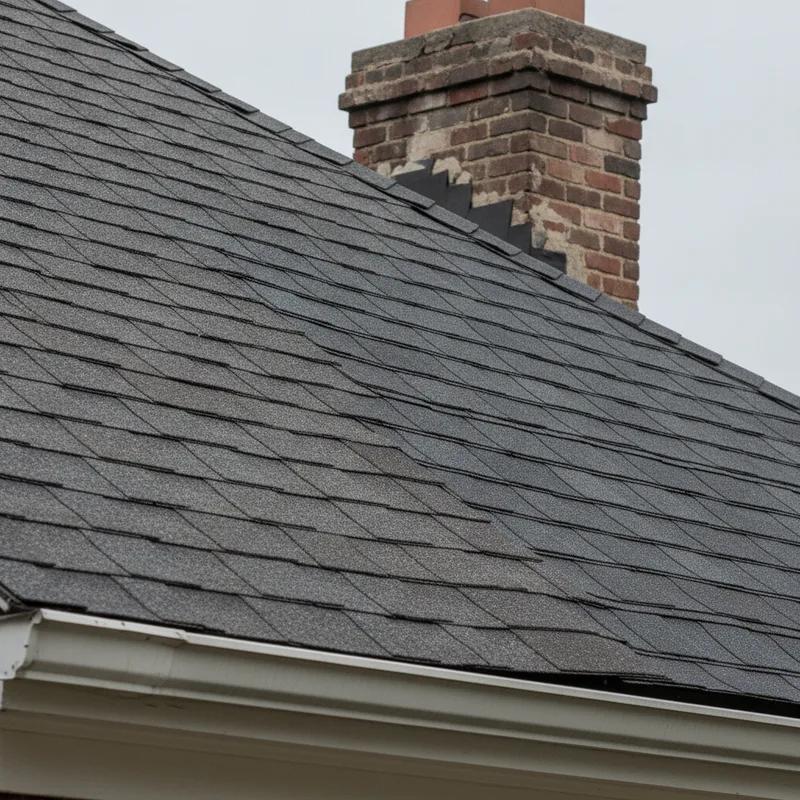
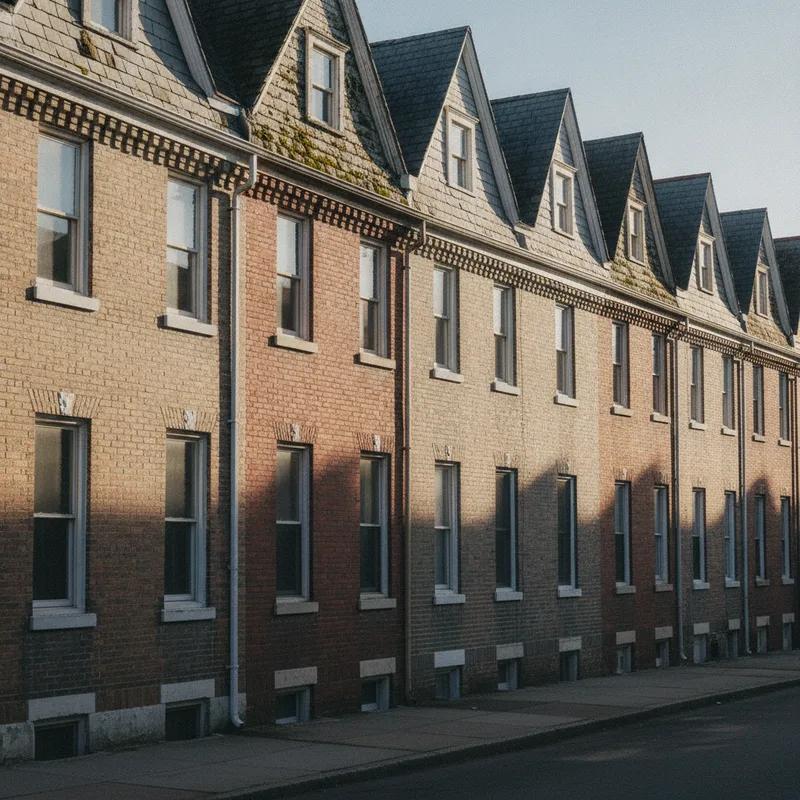
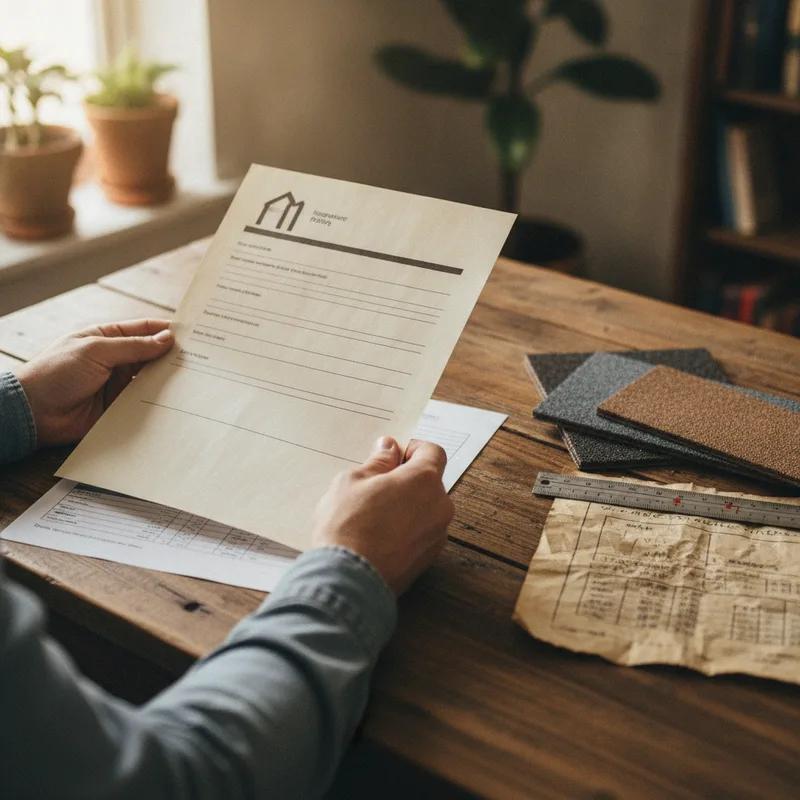
A Philadelphia homeowner reviewing a homeowners insurance policy document at a kitchen table with a concerned expression, roofing estimate papers spread nearby
What's Actually Changed: The New Insurance Landscape for Philadelphia Roofs

2

How Philadelphia's Housing Stock Makes These Changes Hit Harder

Philadelphia's unique housing landscape amplifies the financial impact of these insurance shifts in ways that homeowners in newer suburban markets simply don't face. The city is dominated by attached row homes — an estimated 60 percent or more of the residential housing stock — and those structures come with roofing challenges that are expensive to address even under the best circumstances.

Flat and low-slope roofs are standard on Philadelphia row homes from neighborhoods like Fishtown and Kensington to Point Breeze and West Philadelphia. These roof types — typically covered with EPDM rubber, TPO membrane, or modified bitumen — tend to have shorter recognized lifespans than pitched asphalt shingle roofs. Insurers know this, and their depreciation schedules reflect it. A flat roof that's 12 years old may already be considered near end-of-life by an insurer's actuary, resulting in steep depreciation deductions even if the roof is still performing adequately.

Older homes in historic neighborhoods like Germantown, Chestnut Hill, and Society Hill present additional complications. Philadelphia's Office of Historic Preservation may require specific materials for roof repairs or replacements on contributing properties — materials that cost significantly more than standard options. Insurance payouts calculated on standard material costs can fall far short of what a historically compliant replacement actually requires.

Philadelphia's L&I (Department of Licenses & Inspections) also enforces roofing permit requirements that add legitimate costs to any replacement project. Permit fees, required inspections, and code-compliant materials all add up — and none of those costs are typically factored into a depreciated ACV insurance payout.

For homeowners in older rowhouse blocks in neighborhoods like Brewerytown, Grays Ferry, or Frankford, the combination of aging roofs, ACV-based payouts, and code compliance costs can create a significant financial gap that catches families completely off guard when storm damage strikes.

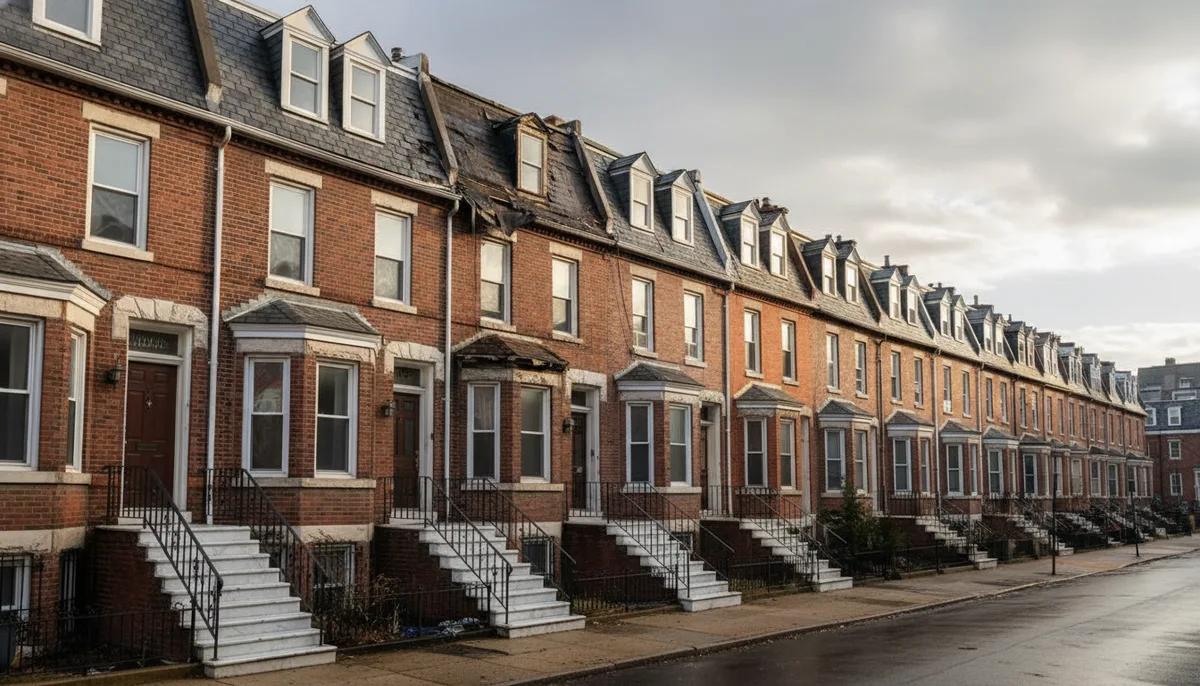
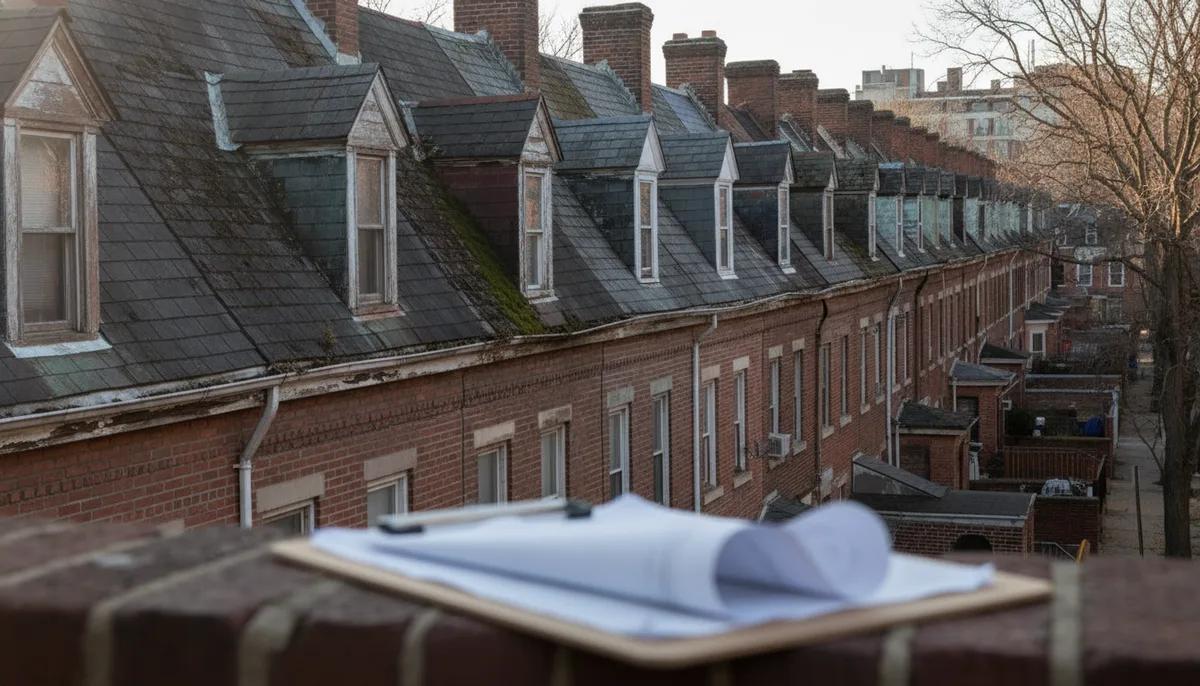
An aerial view of Philadelphia row home rooftops in South Philadelphia showing a mix of flat rubber roofs and low-slope surfaces with visible wear and aging
How Philadelphia's Housing Stock Makes These Changes Hit Harder

3

Decoding Your Policy: ACV vs. RCV and What the Fine Print Really Means

Understanding the difference between actual cash value and replacement cost value coverage is the single most important thing a Philadelphia homeowner can do right now — before the next storm hits.

Replacement cost value (RCV) coverage means your insurer pays what it actually costs to replace your roof with materials of like kind and quality at current prices, minus your deductible. This is the gold standard of roof coverage and what most homeowners assume they have.

Actual cash value (ACV) coverage means your insurer pays the replacement cost minus depreciation. Depreciation is calculated based on the age of your roof, the material type, and the insurer's internal depreciation schedule. Here's the critical detail: depreciation schedules are set by the insurer, not by any government standard, and they vary significantly from company to company. Two insurers might depreciate the same 10-year-old flat roof at 40 percent or 65 percent — a difference of thousands of dollars in your payout.

Some policies use a hybrid approach: they pay ACV upfront and then release the withheld depreciation (called "recoverable depreciation") once the work is completed and documented. This can help, but it requires you to front the money for the full job first — a real hardship for many Philadelphia homeowners.

There's also a newer wrinkle: cosmetic damage exclusions. Some policies now explicitly exclude coverage for damage that affects the appearance of a roof but not its ability to keep water out. After a hail storm, for example, an insurer might argue that dented but intact shingles are cosmetic damage and deny the claim. Philadelphia has seen an uptick in these denials following summer storm seasons.

Action step: Pull out your current declarations page and look for the words "actual cash value," "limited roof coverage," or "cosmetic damage exclusion" in the roof section. If you see them, call your agent immediately to discuss your options for upgrading coverage.

Close-up of a homeowners insurance declarations page with a highlighter marking the roof coverage section, alongside a calculator and pen on a desk
Decoding Your Policy: ACV vs. RCV and What the Fine Print Really Means

4

The Real Cost Gap: What Philadelphia Homeowners Are Actually Paying Out of Pocket

Let's talk real numbers, because the gap between what insurance pays and what a roof replacement actually costs in Philadelphia has grown substantially — and it's not just because of policy changes.

As of mid-2026, a full flat roof replacement on a typical Philadelphia row home runs between $8,000 and $18,000 depending on square footage, material choice, and access complexity. A pitched shingle roof on a larger twin or detached home in neighborhoods like Northeast Philadelphia or Mount Airy can run $15,000 to $30,000 or more. These costs reflect ongoing material price pressures tied to supply chain dynamics and tariff impacts on imported roofing materials that have kept prices elevated through 2025 and into 2026.

Now layer in depreciation. If your 14-year-old flat roof is depreciated at 55 percent on an ACV policy, a $12,000 replacement yields a pre-deductible payout of roughly $5,400. After a $2,500 deductible — and many Philadelphia policies now carry roof-specific deductibles separate from the standard all-peril deductible — you're looking at $2,900 from your insurer on a $12,000 job. That's a $9,100 gap you're covering yourself.

For Philadelphia homeowners who are already navigating tight budgets, that gap is not theoretical — it's a financial crisis. Roofing contractors across the city report an increase in homeowners attempting to patch roofs that genuinely need full replacement because they can't bridge the insurance shortfall.

There are resources available. The Philadelphia Home Improvement Loan Program and various city-administered repair assistance initiatives exist to help income-qualifying homeowners. Pennsylvania's PHFA (Pennsylvania Housing Finance Agency) also offers financing options that can help bridge gaps. But these programs have eligibility requirements and limited funding, and they are not a substitute for adequate insurance coverage.

The most effective financial protection remains getting the right policy before you need it — not scrambling for alternatives after a storm has already damaged your roof.

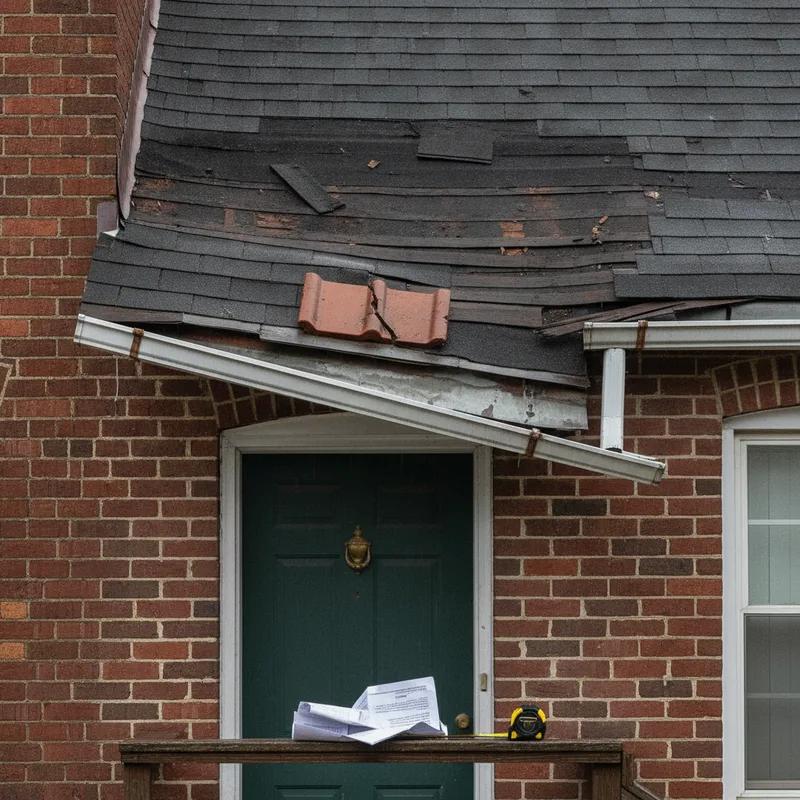
A Philadelphia contractor showing a homeowner a detailed roofing estimate on a clipboard outside a row home, with the homeowner looking concerned while reviewing the numbers
The Real Cost Gap: What Philadelphia Homeowners Are Actually Paying Out of Pocket

5

How to Protect Yourself: Practical Steps Philadelphia Homeowners Should Take Now

The good news is that there are concrete steps you can take right now to reduce your exposure to these insurance shifts — before you ever need to file a claim.

Review your policy today. Don't wait for renewal. Call your insurance agent and ask specifically: Is my roof covered on an RCV or ACV basis? What is my roof deductible? Are there any cosmetic damage exclusions? What is the maximum age of roof the policy will cover on RCV terms? Get the answers in writing.

Get a professional roof inspection. A licensed Philadelphia roofing contractor can give you an honest assessment of your roof's current condition and remaining useful life. This documentation is valuable both for insurance discussions and for planning ahead financially. Many reputable contractors offer free or low-cost inspections. Look for contractors licensed with Philadelphia's Department of Licenses & Inspections.

Upgrade to RCV coverage if you can. In many cases, upgrading from ACV to RCV roof coverage is possible and costs less than homeowners expect — often a modest annual premium increase. Given the potential tens-of-thousands-of-dollar difference in a payout, this is almost always worth it for roofs that are less than 15 years old.

Document your roof's condition. Take dated photos of your roof from accessible vantage points. Keep records of any maintenance, repairs, or inspections. If you ever file a claim, this documentation helps establish condition prior to the damage event and can counter aggressive depreciation calculations.

Consider a roof replacement before it becomes urgent. If your roof is approaching the end of its insurable life — typically 15 to 20 years for flat roofs and 20 to 25 years for asphalt shingles in Philadelphia's climate — proactive replacement while you still have full coverage may be more economical than waiting for a weather event to force the issue under an ACV policy.

Work with a reputable local contractor. Philadelphia has no shortage of storm-chasing contractors who appear after major weather events and pressure homeowners into quick decisions. Use a contractor with a verifiable local presence, proper licensing, and references from Philadelphia neighborhoods.

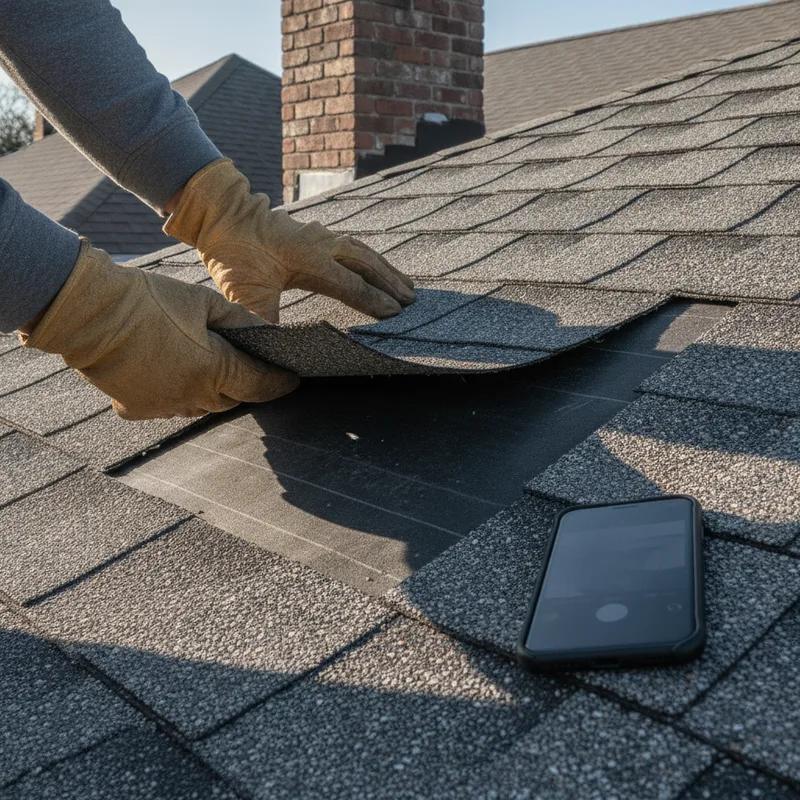
A licensed Philadelphia roofing contractor conducting a roof inspection on a row home in a residential neighborhood, using a tablet to document findings while standing on the roof
How to Protect Yourself: Practical Steps Philadelphia Homeowners Should Take Now

6

Filing a Claim in Philadelphia: How to Maximize Your Payout Under the New Rules

If storm damage has already hit your roof, how you handle the claims process matters enormously under today's more restrictive insurance environment. A poorly managed claim can leave significant money on the table.

First, document everything immediately after the damage occurs. Photograph and video the damage from every accessible angle before any temporary repairs are made. Note the date and time, and cross-reference with publicly available weather records for your Philadelphia zip code — these records can help establish that a specific storm event caused the damage rather than pre-existing wear.

Second, make necessary temporary repairs to prevent further damage — most policies require this — but keep all receipts. Costs for emergency tarping or temporary patching are typically reimbursable under your policy.

Third, get at least two independent estimates from licensed Philadelphia roofing contractors before accepting any settlement offer. Insurance adjusters work for the insurer; their job is to settle claims efficiently, which doesn't always mean settling them at full value. Having independent estimates in hand gives you a documented basis to negotiate.

Fourth, understand that you have the right to dispute a claim decision in Pennsylvania. The Pennsylvania Insurance Department handles consumer complaints and can intervene when insurers act in bad faith or apply depreciation schedules that are unreasonable. If your claim is denied or you believe the payout is significantly undervalued, filing a complaint is a legitimate and often effective step.

Fifth, consider hiring a licensed public adjuster if your claim is large or complex. Public adjusters work on your behalf — not the insurer's — and typically charge a percentage of the settlement. For significant roof replacement claims, their expertise in navigating depreciation disputes and policy language can result in meaningfully higher payouts that more than cover their fee.

Navigating insurance claims is stressful, but Philadelphia homeowners who approach the process informed and documented consistently fare better than those who accept the first offer.

A Philadelphia homeowner photographing storm damage on their flat row home roof with a smartphone after a summer thunderstorm, with visible debris and water pooling on the surface
Filing a Claim in Philadelphia: How to Maximize Your Payout Under the New Rules

Frequently Asked Questions

Can my insurance company switch me from replacement cost to actual cash value coverage without telling me?

Insurers are required to notify policyholders of material coverage changes, typically at renewal, but the notices can be buried in policy documents that many homeowners don't read carefully. It's your responsibility to review your declarations page at each renewal and confirm how your roof is covered. If you discover a change you weren't clearly informed about, contact the Pennsylvania Insurance Department.

How old does a roof have to be before Philadelphia insurers stop offering full replacement cost coverage?

This varies by insurer, but many companies in the Pennsylvania market now cap RCV roof coverage at 15 to 20 years for flat and low-slope roofs and 20 to 25 years for pitched asphalt shingle roofs. Once your roof exceeds those thresholds, some insurers will only offer ACV coverage or may require a roof inspection before renewing. Check your specific policy terms and ask your agent directly.

What is a roof deductible and is it different from my regular homeowners insurance deductible?

Many Philadelphia homeowners insurance policies now carry a separate roof deductible — sometimes expressed as a flat dollar amount and sometimes as a percentage of your home's insured value — that applies specifically to roof damage claims. This is separate from your standard all-peril deductible and can be significantly higher. A 2% wind/hail deductible on a home insured for $350,000, for example, means $7,000 comes out of your pocket before insurance pays anything.

Are there Philadelphia or Pennsylvania programs that help homeowners pay for roof replacements when insurance falls short?

Yes, several programs exist for income-qualifying homeowners. The Philadelphia Home Improvement Loan Program and Basic Systems Repair Program offer assistance for structural repairs including roofing. The Pennsylvania Housing Finance Agency (PHFA) offers home improvement loan products. Eligibility requirements and funding availability vary, so contact the Philadelphia Division of Housing and Community Development or PHFA directly to determine what you qualify for.

Can I negotiate with my insurance company if I think my roof claim payout is too low?

Yes, and you should. Gather independent estimates from at least two licensed Philadelphia roofing contractors and present them to your insurer as documentation. If the insurer won't budge, you can file a complaint with the Pennsylvania Insurance Department or hire a licensed public adjuster to negotiate on your behalf. Pennsylvania law also provides for appraisal processes in disputed claims that can result in a binding independent valuation.

James Callahan
Founder & Editor, Philly Roof Find

James founded Philly Roof Find to give Philadelphia homeowners a transparent, independent resource for evaluating roofing contractors. With a background in building trades and a focus on local construction practices, he writes practical guides grounded in Philadelphia-specific building codes, materials, and contractor standards.

Related Articles

How to File a Roof Damage Insurance Claim in Pennsylvania: A Step-by-Step Guide for Philadelphia Homeowners - Philadelphia roofing guide

How to File a Roof Damage Insurance Claim in Pennsylvania: A Step-by-Step Guide for Philadelphia Homeowners

Filing a roof damage insurance claim in Pennsylvania can feel overwhelming, especially after a major storm rolls through Philadelphia neighborhoods like Roxborough, Germantown, or South Philly. This step-by-step guide walks you through every stage of the claims process—from documenting damage to negotiating with your adjuster—so you can protect your home and maximize your payout. Whether you have a flat-roofed row home or a pitched-roof twin, knowing your rights as a Pennsylvania homeowner makes all the difference.

How Roof Age Affects Your Philadelphia Home Insurance Rates - Philadelphia roofing guide

How Roof Age Affects Your Philadelphia Home Insurance Rates

If you own a home in Philadelphia, your roof's age could be quietly driving up your homeowners insurance premiums — or even putting your coverage at risk. Insurers view older roofs as higher-risk liabilities, especially in a city where nor'easters, ice dams, and summer storms cause serious damage. This guide explains exactly how roof age factors into your rates and what Philadelphia homeowners can do about it.

Roof Replacement Costs in Philadelphia: What Homeowners Pay - Philadelphia roofing guide

Roof Replacement Costs in Philadelphia: What Homeowners Pay

Roof replacement in Philadelphia costs more than the national average due to the city's unique housing stock, strict permitting requirements, and variable weather. Whether you own a South Philly row home or a detached colonial in Chestnut Hill, understanding local pricing can save you thousands. This guide breaks down what you'll actually pay in 2026 and how to get the best value from local contractors.