What Philadelphia Homeowners Should Know About Roof Warranties

Learn how manufacturer vs. workmanship roof warranties work in Philadelphia, what voids them, and how to protect your investment as a Philly homeowner.

What Philadelphia Homeowners Should Know About Roof Warranties - Philadelphia roofing guide

Roof warranties can be the difference between a costly out-of-pocket repair and a fully covered fix — but most Philadelphia homeowners don't read the fine print until it's too late.

James Callahan
Published March 20, 2026·Updated March 20, 2026
1

The Two Types of Roof Warranties Every Philadelphia Homeowner Needs to Understand

When a roofing contractor replaces your roof in Philadelphia, you'll typically receive two separate warranties — and confusing them is one of the most common and costly mistakes homeowners make. Understanding the distinction upfront can save you thousands of dollars and a lot of frustration down the road.

The first is a manufacturer's warranty, which covers the roofing materials themselves — shingles, underlayment, flashing components, and similar products. These warranties are issued by the company that made the materials, such as GAF, Owens Corning, or CertainTeed. Standard manufacturer warranties typically range from 25 years to a lifetime, but the coverage details vary significantly. A basic shingle warranty might only cover manufacturing defects, while a premium "enhanced" or "system" warranty can cover weather-related damage and even labor costs for repairs.

The second is a workmanship warranty, sometimes called a contractor warranty or labor warranty. This is issued directly by your roofing contractor and covers errors in installation — things like improper flashing around a chimney, poor sealing around a skylight, or inadequate nailing patterns that lead to shingle blow-offs. Workmanship warranties in Philadelphia typically range from 1 to 10 years, though reputable contractors often offer 5-year or longer coverage.

For Philadelphia homeowners, both warranties matter equally. The city's weather — including nor'easters, freeze-thaw cycles, and summer humidity — puts constant stress on roofing systems. A manufacturing defect might not show up for years, while a workmanship error can cause a leak within months of installation. Knowing which warranty applies to your specific problem determines who you call and whether you'll pay out of pocket.

Always ask your contractor to provide both warranty documents in writing before work begins, and keep copies in a safe place alongside your homeowner's insurance policy.
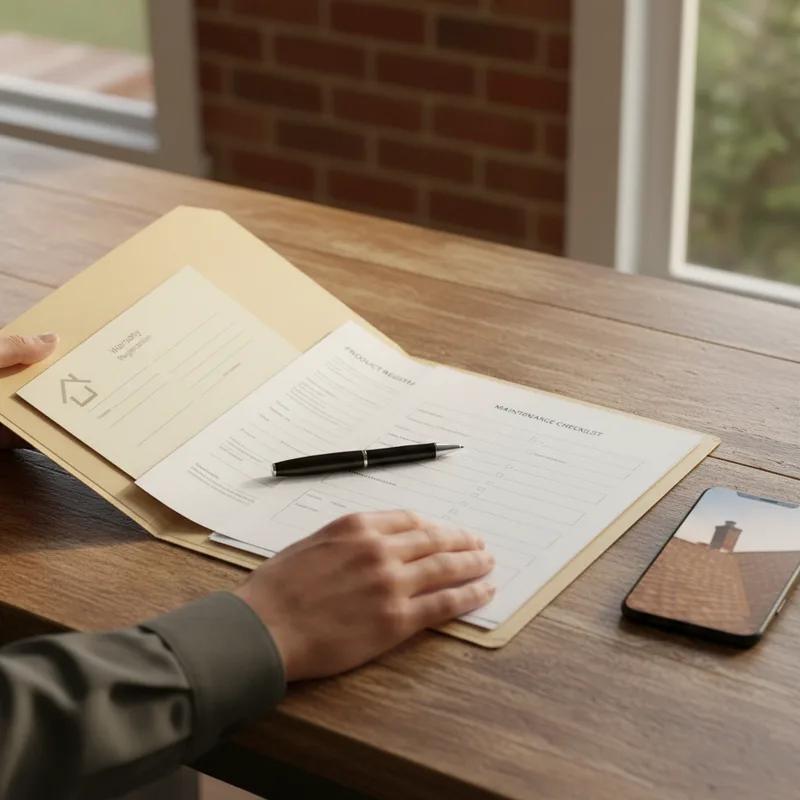
Philadelphia homeowner reviewing two separate roofing warranty documents at a kitchen table, with a row home visible through the window
The Two Types of Roof Warranties Every Philadelphia Homeowner Needs to Understand

2

What Manufacturer Warranties Actually Cover — and Their Hidden Limitations

Manufacturer warranties sound reassuring on paper, but the fine print often contains limitations that surprise Philadelphia homeowners when they file a claim. Before you assume your 30-year shingle warranty has you fully covered, it's worth understanding exactly what these warranties do and don't protect.

Most standard manufacturer warranties cover defects in the materials themselves — things like premature granule loss, cracking due to a production flaw, or shingles that fail to meet their rated wind resistance. What they typically don't cover is damage caused by improper installation, acts of nature beyond certain wind speeds, or failure to follow the manufacturer's specific installation guidelines.

One of the most important distinctions is between a prorated and a non-prorated warranty. A prorated warranty reduces the manufacturer's financial responsibility over time — so if your shingles fail in year 20 of a 30-year warranty, you might only receive a fraction of the replacement cost. Non-prorated warranties (often found in premium product lines) maintain full coverage for the duration. When getting estimates in Philadelphia, always ask which type applies.

Premium manufacturer warranties — sometimes called "enhanced," "platinum," or "system" warranties — offer broader protection but come with a catch: they typically require installation by a certified contractor. GAF's Golden Pledge warranty, for example, requires installation by a GAF Master Elite contractor. CertainTeed's SureStart Plus warranty requires a ShingleMaster-certified installer. In Philadelphia, these certified contractors exist, but not every company advertising on a yard sign qualifies.

For flat roofs, which are extremely common on Philadelphia row homes and rowhouse additions, manufacturer warranties work differently. TPO, EPDM, and modified bitumen systems have their own warranty structures, often tied to membrane thickness and installation method. Always request the specific warranty documentation for the exact product being installed on your home.

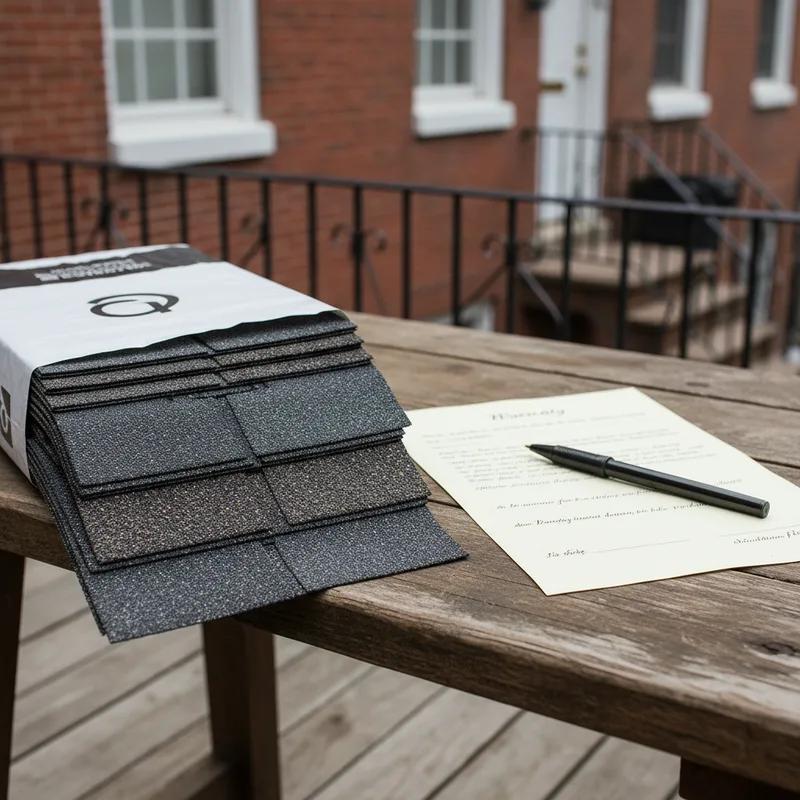
Close-up of a GAF or CertainTeed roofing shingle warranty document next to product packaging on a Philadelphia rooftop
What Manufacturer Warranties Actually Cover — and Their Hidden Limitations

3

Workmanship Warranties: Why Your Contractor's Guarantee Matters as Much as the Materials

Even the highest-quality roofing materials will fail if they're installed incorrectly — and in Philadelphia's competitive roofing market, workmanship quality varies dramatically from one contractor to the next. A workmanship warranty is your primary protection against installation errors, and understanding what a strong one looks like can help you choose the right contractor.

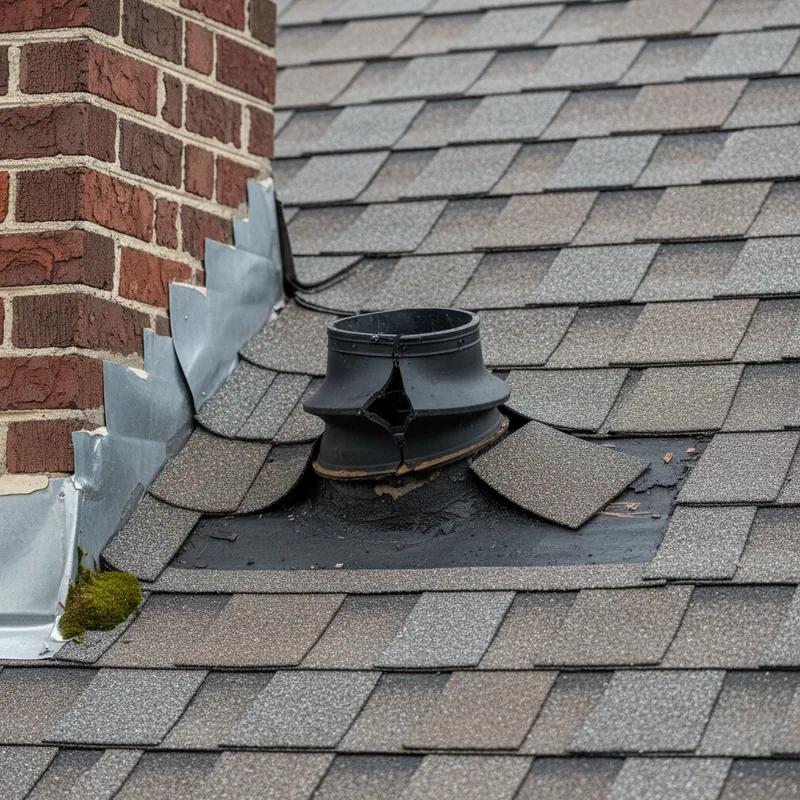
A solid workmanship warranty should cover all labor-related failures for a defined period — typically leaks, improper flashing, poor sealing around penetrations (chimneys, pipes, skylights), and inadequate fastening. In Philadelphia's older housing stock, proper flashing installation is especially critical. Many Fishtown, South Philly, and West Philly row homes have complex rooflines with shared walls, multiple penetrations, and aging brick chimneys that require careful attention during installation.

When evaluating workmanship warranties, look for these key details: the length of coverage (longer is better, with 5+ years being a strong indicator of contractor confidence), whether it's transferable if you sell your home, and what the claims process looks like. Some contractors require written notice within a specific timeframe after a problem appears — missing that window can void the warranty entirely.

Be cautious of contractors offering unusually short workmanship warranties — one year or less — as this can signal low confidence in their own installation quality. Conversely, a contractor offering a 10-year workmanship warranty backed by a reputable business with verifiable references is a strong positive signal.

It's also worth noting that workmanship warranties are only as good as the company behind them. If a fly-by-night contractor closes up shop after your installation, that warranty is worthless. Always verify that your contractor is licensed through Pennsylvania's Bureau of Consumer Protection, carries active general liability and workers' compensation insurance, and has a physical business address in or near Philadelphia. Check their standing with the Better Business Bureau and ask for references from jobs completed in your specific neighborhood.

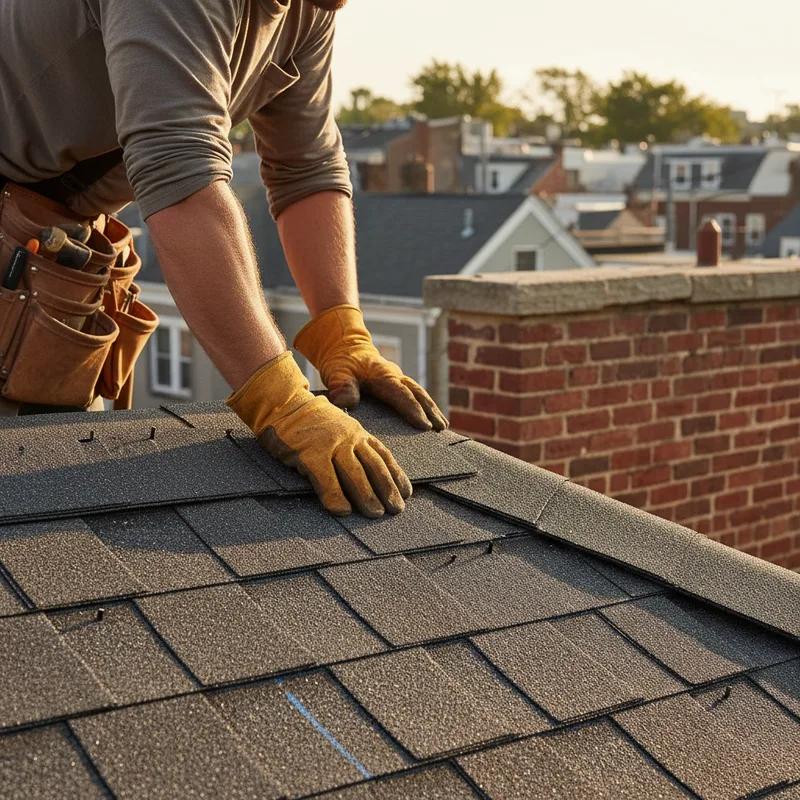
Philadelphia roofing contractor shaking hands with a homeowner after completing a row home roof installation in a South Philly neighborhood
Workmanship Warranties: Why Your Contractor's Guarantee Matters as Much as the Materials

4

Common Actions That Void Roof Warranties in Philadelphia Homes

This is where many Philadelphia homeowners get caught off guard: a long list of seemingly routine actions can void your roof warranty entirely, leaving you without coverage when you need it most. Both manufacturer and workmanship warranties contain clauses that can be triggered by things you might not even think twice about.

Hiring an unlicensed or non-certified contractor for repairs is one of the most common warranty killers. If your manufacturer warranty requires a certified installer and you later hire an uncertified contractor to patch a section, the entire warranty can be voided. This is especially relevant in Philadelphia, where storm chasers and unlicensed contractors frequently solicit homeowners after nor'easters and summer storms.

Installing rooftop equipment without proper protocols is another major issue. Philadelphia homeowners increasingly add solar panels, rooftop HVAC units, satellite dishes, and even rooftop decks to their homes. Any penetration or modification to the roof surface that isn't performed according to manufacturer guidelines — or isn't approved in advance — can void coverage. If you're adding solar panels to your Germantown or Mount Airy home, make sure your installer coordinates with your roofing contractor and follows warranty-compliant procedures.

Failure to maintain the roof is a less-discussed but equally important voiding condition. Most warranties require that homeowners perform reasonable maintenance — cleaning gutters, removing debris, addressing minor issues promptly. Philadelphia's mature tree canopy, especially in neighborhoods like Chestnut Hill and Overbrook, means gutters and roof surfaces accumulate leaves and debris quickly. Documented neglect can give a manufacturer grounds to deny a claim.

Pressure washing the roof is explicitly prohibited by most shingle manufacturers, as high-pressure water strips granules and damages the shingle surface. Similarly, applying unapproved coatings or sealants can void coverage. Always check with your manufacturer before applying any product to your roof surface.

Finally, failing to get required permits for your roof replacement can create legal and warranty complications. Philadelphia's Department of Licenses & Inspections requires permits for most full roof replacements, and skipping this step can affect both your warranty and your homeowner's insurance coverage.

Philadelphia row home rooftop showing a satellite dish installation and solar panels that could potentially affect roofing warranty coverage
Common Actions That Void Roof Warranties in Philadelphia Homes

5

How to Register, Maintain, and Actually Use Your Roof Warranty in Philadelphia

Having a warranty is only half the battle — you also need to properly register it, maintain documentation, and know how to file a claim if something goes wrong. Surprisingly, many Philadelphia homeowners never register their manufacturer warranty at all, which can significantly limit their coverage.

Registering your manufacturer warranty is often required within a specific timeframe after installation — commonly 30 to 60 days. This is typically done online through the manufacturer's website. Your contractor may handle this on your behalf, but don't assume they did. Ask for written confirmation that the warranty has been registered in your name with your property address. Keep the registration confirmation with your other home documents.

Documenting your roof's condition is equally important. Before your new roof is installed, take photographs of the old roof and any pre-existing damage. After installation, photograph the completed work, including all flashing, valleys, penetrations, and edges. These photos can be invaluable if a warranty dispute arises later. Some Philadelphia homeowners also schedule a third-party inspection shortly after installation to verify the work meets manufacturer specifications — a small upfront cost that can pay off significantly.

Transferring your warranty when selling your home can add real value. Many manufacturer warranties are transferable to a new owner, though some require a transfer fee and formal notification. If you're selling a home in Fairmount, Northern Liberties, or any other Philadelphia neighborhood, a transferable roof warranty is a legitimate selling point worth highlighting.

Filing a warranty claim requires prompt action. Document the problem with photos, note the date you first observed the issue, and contact your contractor or manufacturer in writing. Keep records of all communications. If your contractor is unresponsive, contact the manufacturer directly — they have a vested interest in protecting their brand and will often facilitate resolution.

For flat roofs common throughout Philadelphia's rowhouse neighborhoods, annual professional inspections are strongly recommended and may actually be required to maintain warranty validity. Schedule these inspections every spring after winter's freeze-thaw cycles have done their worst.

Philadelphia homeowner photographing a newly installed flat roof on a rowhouse for warranty documentation purposes, with city skyline in background
How to Register, Maintain, and Actually Use Your Roof Warranty in Philadelphia

6

Philadelphia-Specific Considerations: Row Homes, Flat Roofs, and Historic Districts

Philadelphia's unique housing landscape creates warranty considerations that simply don't apply in most other cities. From the dense row home neighborhoods of South Philly and Kensington to the historic districts of Society Hill and Germantown, local factors significantly affect how warranties apply and what homeowners should watch for.

Row home roofing warranties present a particular challenge because of shared party walls and the interconnected nature of attached homes. Water infiltration on a row home can originate from a neighboring property's roof or flashing, but your warranty only covers your portion of the roof system. Establishing the source of a leak — and therefore which warranty or insurance policy applies — can become complicated. Documenting your roof's boundaries clearly at installation time is smart practice.

Flat roof warranties deserve special attention in Philadelphia, where the majority of row homes and many twins feature flat or low-slope roof sections. EPDM, TPO, and modified bitumen systems have specific warranty structures that differ from pitched shingle roofs. Many flat roof warranties require annual or biannual inspections by a qualified contractor to remain valid — skipping these inspections is a common reason claims get denied. Philadelphia's freeze-thaw cycles are particularly hard on flat roofs, making maintenance even more critical.

Historic district requirements add another layer of complexity. If your home is in a Philadelphia Historic District — including parts of Society Hill, Old City, Rittenhouse Square, or Germantown — the Philadelphia Historical Commission may require specific roofing materials that don't always align with the products offering the strongest manufacturer warranties. Work with contractors experienced in historic district compliance to find warranted products that also meet preservation standards.

Philadelphia building code compliance is non-negotiable for warranty validity. The city follows the International Residential Code with Pennsylvania amendments, and L&I requires permits for most full roof replacements. A roof installed without required permits may face warranty complications and could create problems when selling your home or filing an insurance claim. Always confirm your contractor pulls the necessary permits before work begins.

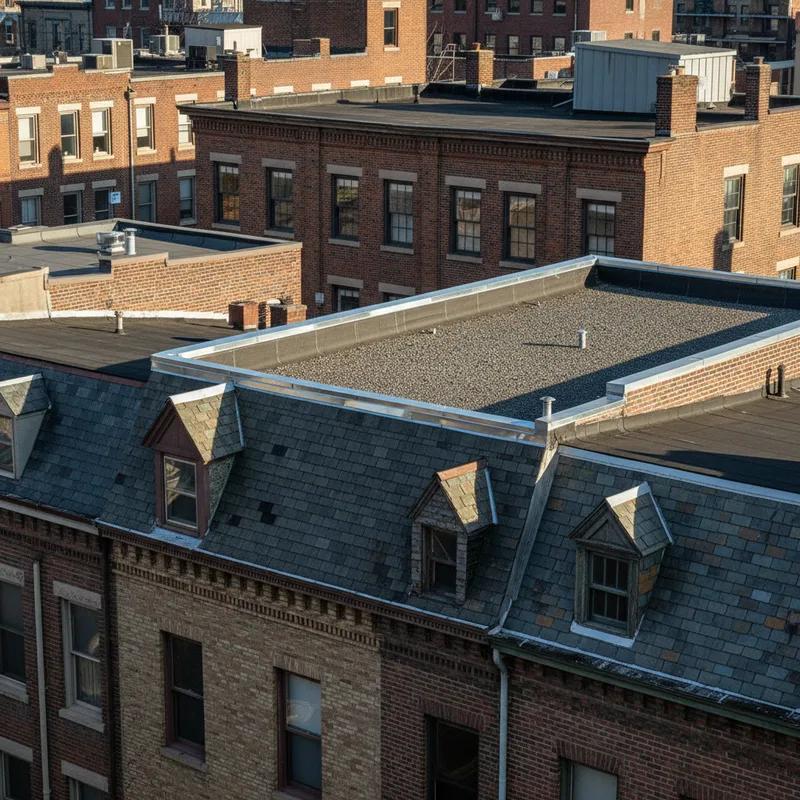
Aerial view of Philadelphia row home rooftops in South Philadelphia showing a mix of flat roofs and pitched roofs in a dense urban neighborhood
Philadelphia-Specific Considerations: Row Homes, Flat Roofs, and Historic Districts

Frequently Asked Questions

How long does a roof warranty last in Philadelphia?

Manufacturer warranties on roofing materials typically range from 25 years to a lifetime, depending on the product line and manufacturer. Workmanship warranties from contractors usually range from 1 to 10 years, with reputable Philadelphia contractors commonly offering 5 years or more. Always get both warranty types in writing before your project begins.

Does adding solar panels void my roof warranty in Philadelphia?

It can, if the installation isn't performed according to the roofing manufacturer's guidelines or if penetrations are made without proper approval. To protect your warranty, coordinate with both your roofing contractor and solar installer before any panels are mounted, and ensure the solar company follows manufacturer-compliant installation procedures.

Are roof warranties transferable when I sell my Philadelphia home?

Many manufacturer warranties are transferable to a new homeowner, though some require a formal transfer request and a fee within a specified timeframe. Workmanship warranties vary by contractor — some transfer automatically while others do not. Check your specific warranty documents and notify the manufacturer or contractor in writing when ownership changes.

What voids a roof warranty in Pennsylvania?

Common warranty-voiding actions include hiring an uncertified contractor for repairs, failing to register the warranty after installation, neglecting routine maintenance like gutter cleaning, pressure washing the roof surface, applying unapproved coatings, and installing rooftop equipment without following manufacturer guidelines. Failing to obtain required Philadelphia L&I permits can also affect warranty validity.

Do I need a permit for a roof replacement in Philadelphia, and does it affect my warranty?

Yes, Philadelphia's Department of Licenses & Inspections generally requires a permit for full roof replacements. Skipping this permit can affect your homeowner's insurance coverage and may complicate warranty claims. Always confirm your contractor pulls the required permits — a legitimate, licensed contractor will do this as a standard part of the job.

James Callahan
Founder & Editor, Philly Roof Find

James founded Philly Roof Find to give Philadelphia homeowners a transparent, independent resource for evaluating roofing contractors. With a background in building trades and a focus on local construction practices, he writes practical guides grounded in Philadelphia-specific building codes, materials, and contractor standards.