Hidden Roof Leaks: What Philadelphia Homeowners Must Know

Discover how to spot hidden roof leaks before they become costly disasters. Essential advice for Philadelphia homeowners on early detection and protection.

Hidden Roof Leaks: What Philadelphia Homeowners Must Know - Philadelphia roofing guide

Hidden roof leaks are one of the most destructive — and deceptive — problems a Philadelphia homeowner can face.

James Callahan
Published July 2, 2026·Updated July 2, 2026
1

Why Hidden Roof Leaks Are Especially Dangerous in Philadelphia

Philadelphia's weather is notoriously unpredictable — and hard on roofs. The city experiences a full range of seasonal extremes: summer humidity and UV heat, nor'easters and heavy snowfall in winter, and powerful thunderstorms in spring and fall. Each of these weather events creates opportunities for water to find its way into your home, often through vulnerabilities so small they go unnoticed for months.

What makes hidden leaks particularly dangerous is the delay between infiltration and visible damage. Water entering through a compromised flashing joint, a cracked shingle, or a deteriorating flat roof membrane doesn't always drip straight down to your ceiling. Instead, it travels along rafters, soaks into insulation, pools on top of drywall, and slowly rots the structural components of your home — all without a single visible stain.

For Philadelphia's aging housing stock, this risk is amplified. A significant portion of the city's homes were built before 1950, and many row homes in neighborhoods like Kensington, Fishtown, and West Philadelphia have roofs that have been patched and re-patched over decades. Older materials, outdated flashing systems, and years of deferred maintenance create a perfect environment for hidden leaks to develop and spread.

The financial stakes are high. A leak that goes undetected for one season can result in mold remediation costs, full roof deck replacement, and interior repairs that run into the tens of thousands of dollars. Catching a leak early — when the fix might be a simple flashing repair or sealant application — can save Philadelphia homeowners enormous amounts of money and stress. Understanding the warning signs before they become obvious is the first and most critical step.
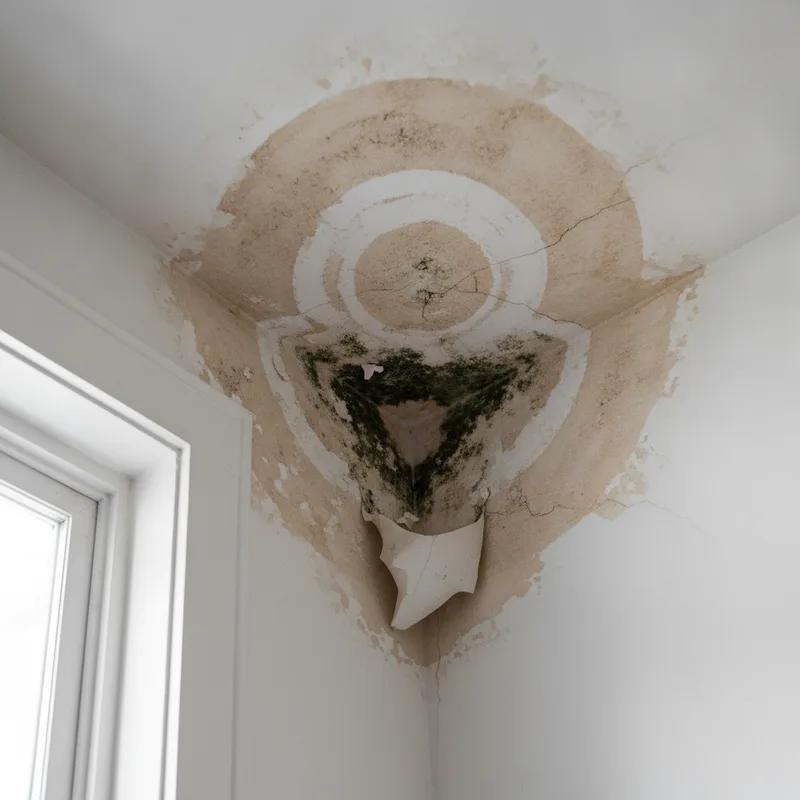
Water stains spreading across the interior ceiling of an older Philadelphia row home, with peeling paint and visible moisture damage near a roofline junction
Why Hidden Roof Leaks Are Especially Dangerous in Philadelphia

2

The Early Warning Signs Most Philadelphia Homeowners Miss

Most people know to look for ceiling stains or dripping water, but by the time those signs appear, a hidden leak has often been active for weeks or even months. There are subtler clues that Philadelphia homeowners should train themselves to recognize — especially given the city's mix of flat roofs, pitched roofs, and complex row home configurations.

In your attic or top floor, look for discoloration on rafters or roof sheathing, a musty smell that lingers even after airing out the space, or insulation that feels damp or compressed. Wet insulation loses its effectiveness and becomes a breeding ground for mold, and it often holds moisture long after a leak has temporarily stopped.

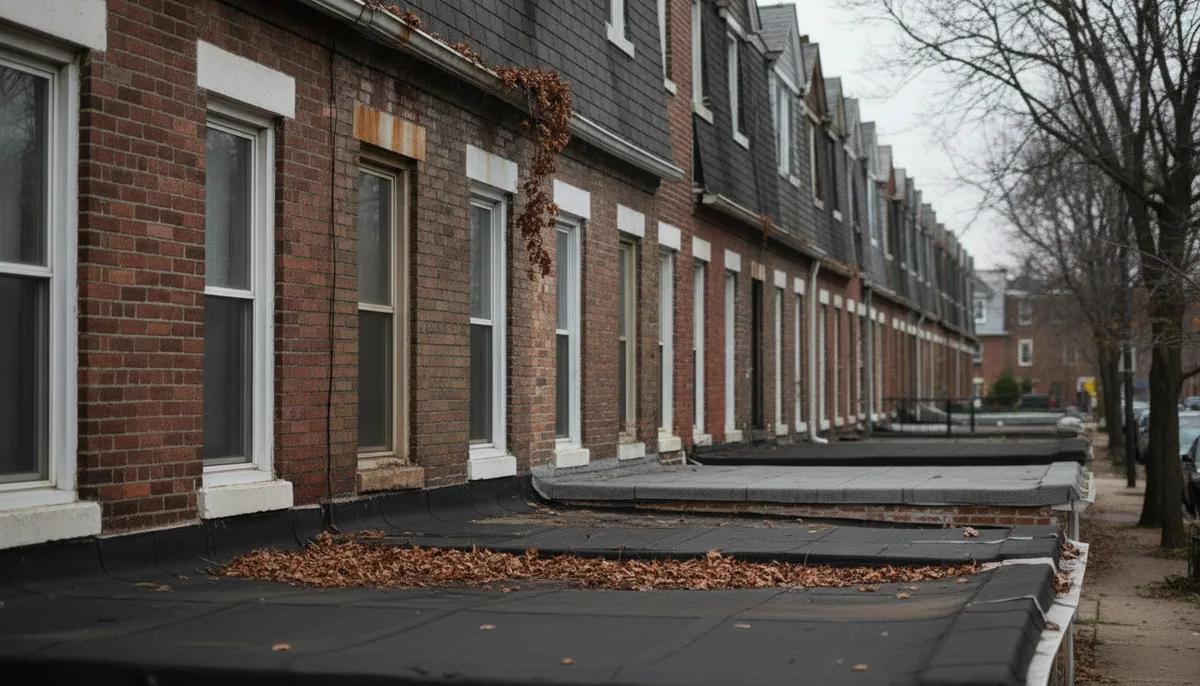
On your roof itself — or from the ground with binoculars — watch for missing, curling, or cracked shingles, especially after a storm. On flat roofs common to Philadelphia row homes, look for bubbling or blistering in the membrane, standing water that hasn't drained within 48 hours, or visible separations around HVAC units, vents, and parapet walls. These are classic entry points for water.

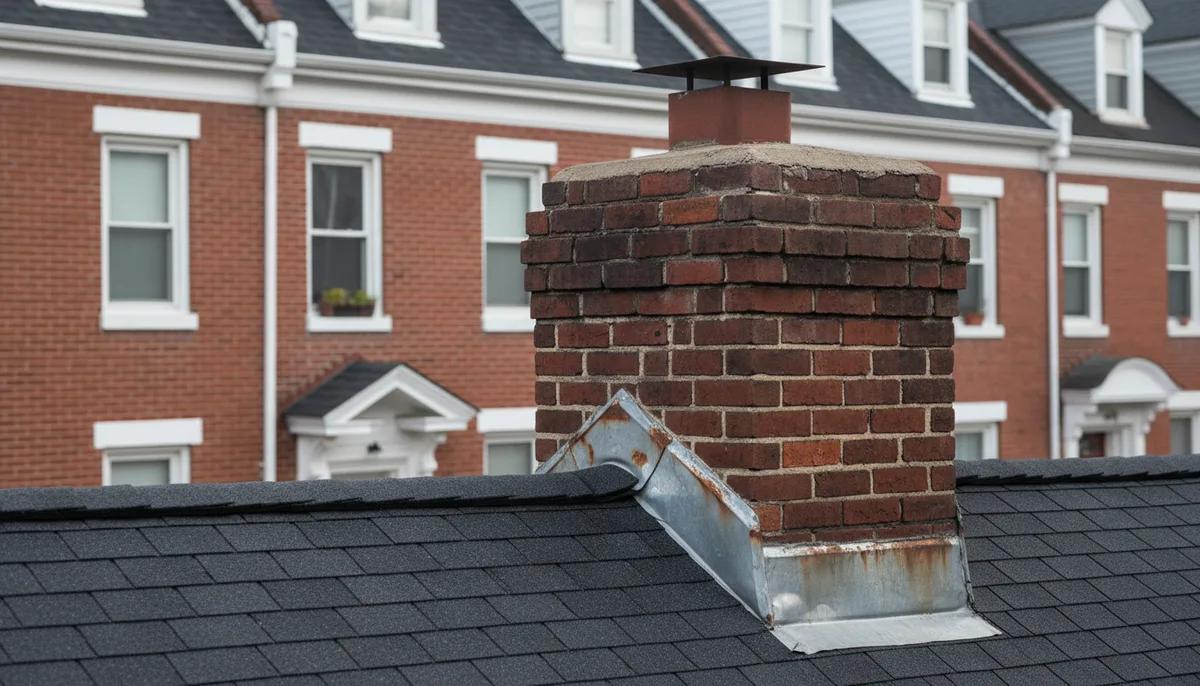
Inside your home, don't dismiss small paint bubbles on walls or ceilings, especially near chimneys or exterior walls. Efflorescence — a white, chalky residue on brick or masonry — is a strong indicator that water is moving through the structure. Warped or buckled wood floors on upper stories can also signal a slow leak above.

In Philadelphia's historic neighborhoods like Germantown and Chestnut Hill, older chimney flashing made from lead or deteriorating mortar is a frequent culprit. If your home has a chimney, inspect the flashing and mortar joints at least once a year. Catching a hairline crack before the next rainstorm can mean the difference between a $300 repair and a $5,000 interior restoration.

Close-up of a Philadelphia row home rooftop showing bubbling EPDM membrane near an HVAC unit and standing water pooling around a parapet wall
The Early Warning Signs Most Philadelphia Homeowners Miss

3

Philadelphia's Unique Roofing Challenges: Row Homes, Flat Roofs, and Shared Walls

Philadelphia's housing stock presents a set of roofing challenges you simply won't find in suburban or rural markets. The city's iconic row homes — densely packed, wall-to-wall structures that define neighborhoods from South Philly to Olney — create specific vulnerabilities that require a Philadelphia-savvy approach to leak detection and repair.

Because row homes share party walls, a leak in one home can migrate into an adjacent property. Water traveling through shared masonry is a common and often contentious problem, particularly when neighbors disagree about the source of the damage. If you notice moisture on an interior wall that borders a neighboring property, it's worth having a conversation with your neighbor and getting a professional inspection before assuming the source is your own roof.

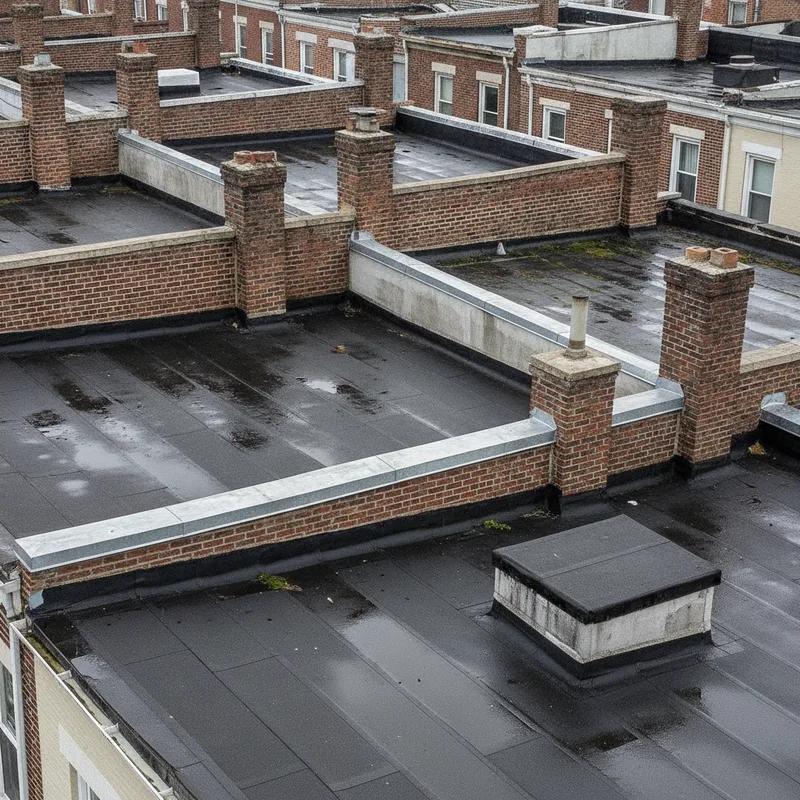
Flat roofs are the dominant roofing style on Philadelphia row homes, and they come with their own set of challenges. Unlike pitched roofs that shed water quickly, flat roofs rely on drainage systems — internal drains, scuppers, and gutters — to move water off the surface. When these systems become clogged with debris, water ponds on the membrane, accelerating deterioration and dramatically increasing leak risk. Philadelphia's urban tree canopy, while beautiful, means gutters and drains fill up with leaves and debris quickly, especially in fall.

Chimneys are another major vulnerability. Many Philadelphia homes have multiple chimneys — some still active, some capped — and the flashing around these structures is often the first point of failure. The Philadelphia Department of Licenses & Inspections (L&I) requires that roofing work on structures in historic districts comply with additional standards, which can affect material choices and repair methods in neighborhoods like Society Hill and Rittenhouse Square.

Understanding these neighborhood-specific and structural factors isn't just helpful — it's essential for accurately diagnosing where a hidden leak originates and how to fix it properly.

Aerial view of a densely packed Philadelphia row home block in South Philly showing flat rooftops with HVAC units, chimneys, and varying roofing membrane conditions
Philadelphia's Unique Roofing Challenges: Row Homes, Flat Roofs, and Shared Walls

4

How to Conduct a Basic Leak Inspection as a Philadelphia Homeowner

You don't need to be a professional roofer to catch early warning signs of a hidden leak. A methodical, twice-yearly inspection — ideally in spring after winter storms and in fall before the cold sets in — can help you identify problems before they escalate. Here's how to approach it safely and effectively.

Start inside. Head to your attic or the highest accessible space in your home and use a flashlight to examine the underside of the roof deck. Look for dark staining, soft or spongy wood, visible mold, or daylight coming through gaps. Check around any penetrations — vent pipes, skylights, HVAC connections — as these are common leak entry points. Do this inspection after a heavy rain if possible, as active moisture is easier to spot.

Next, inspect your ceilings and upper walls on every floor of your home. Pay special attention to corners, areas near chimneys, and spots directly below any rooftop equipment. Small paint bubbles or faint yellow-brown rings are easy to dismiss but should always be investigated.

From the ground, use binoculars to examine your roof surface. On flat roofs, look for visible seam separations, membrane lifting near edges, or debris accumulation around drains. On pitched roofs, check for missing or damaged shingles, granule loss (which often shows up as dark patches), and sagging areas.

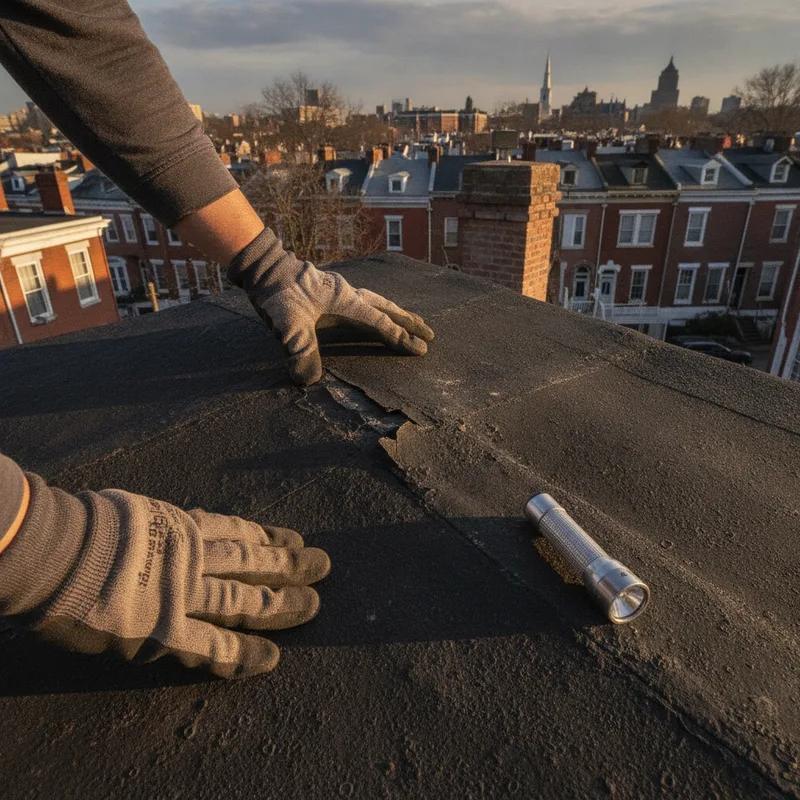
If you can safely access your roof — and many Philadelphia flat roofs are accessible via a rooftop hatch or bulkhead door — walk the perimeter and check flashing around all penetrations and parapet walls. Never walk on a pitched roof without proper safety equipment.

For anything beyond a basic visual check, contact a licensed Philadelphia roofing contractor for a professional inspection. Many contractors offer free or low-cost inspections, and the investment is well worth it given the cost of undetected damage. Drone inspections are also increasingly available and offer a safe, detailed view of hard-to-reach areas.

A Philadelphia homeowner using a flashlight to inspect the underside of roof sheathing in a dimly lit attic, checking for water stains and soft wood near the ridge
How to Conduct a Basic Leak Inspection as a Philadelphia Homeowner

5

What to Do When You Find a Leak: Immediate Steps and Professional Repairs

Discovering a roof leak — even a small one — requires prompt action. The longer water is allowed to infiltrate your home's structure, the more extensive and expensive the damage becomes. Here's what Philadelphia homeowners should do the moment they suspect or confirm a leak.

First, protect your interior. Place buckets or towels to catch dripping water and move furniture, electronics, and valuables away from the affected area. If water is pooling significantly, use a utility knife to carefully puncture the lowest point of a ceiling bulge — this releases accumulated water in a controlled way and prevents a sudden, damaging collapse.

Document everything. Take photos and video of all visible damage, both on the roof and inside the home. This documentation is critical if you plan to file a homeowner's insurance claim. Note the date, the weather conditions, and the location of damage as specifically as possible.

Contact a licensed Philadelphia roofing contractor as soon as possible. Under Pennsylvania's contractor licensing requirements, roofing contractors performing work in Philadelphia must hold appropriate licenses and permits. Always verify a contractor's credentials through the Pennsylvania Attorney General's Home Improvement Contractor (HIC) registry before signing anything. Be especially cautious of door-to-door contractors who appear immediately after storms — a common scam pattern in Philadelphia neighborhoods.

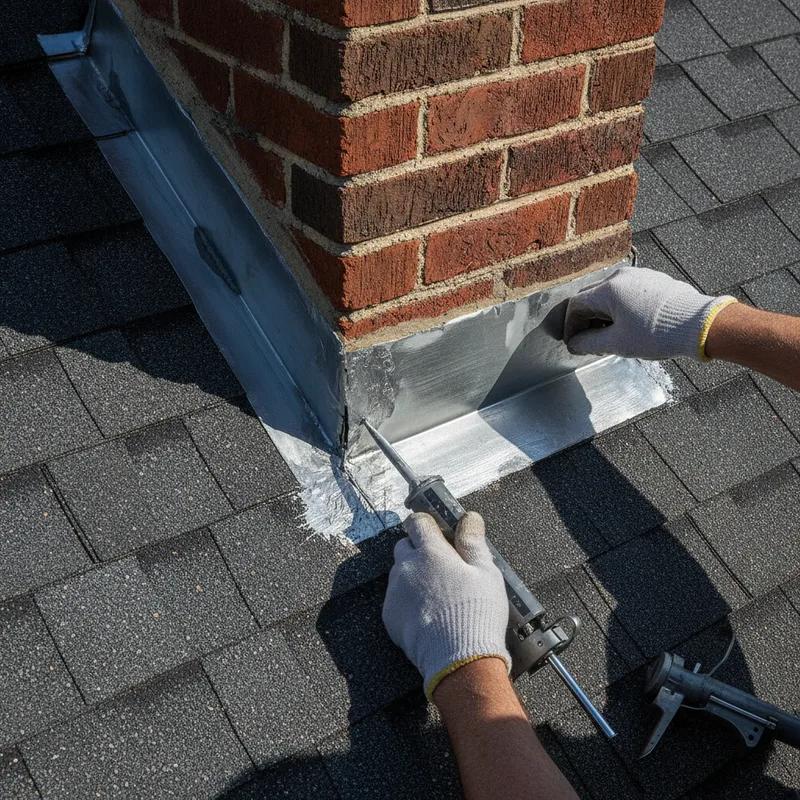
For temporary protection while waiting for repairs, a professional can install a roof tarp to prevent further water intrusion. This is particularly important heading into Philadelphia's rainy season or winter months. Do not attempt to apply permanent repairs yourself — improper patching can void warranties, create new leak points, and may not comply with Philadelphia's building code requirements.

Once repairs are made, ask your contractor for documentation including the scope of work, materials used, and any applicable warranties. Philadelphia's L&I office may require permits for certain roofing repairs, particularly on larger jobs or in historic districts, so confirm this with your contractor before work begins.

A licensed roofer in safety gear applying flashing sealant around a chimney base on a Philadelphia row home roof during a repair visit on a cloudy day
What to Do When You Find a Leak: Immediate Steps and Professional Repairs

6

Preventing Hidden Leaks: Maintenance Strategies for Philadelphia Homes

The best defense against hidden roof leaks is a consistent, proactive maintenance routine tailored to Philadelphia's climate and housing types. Most serious roof leaks don't happen suddenly — they develop gradually through neglected maintenance, and they're almost always preventable.

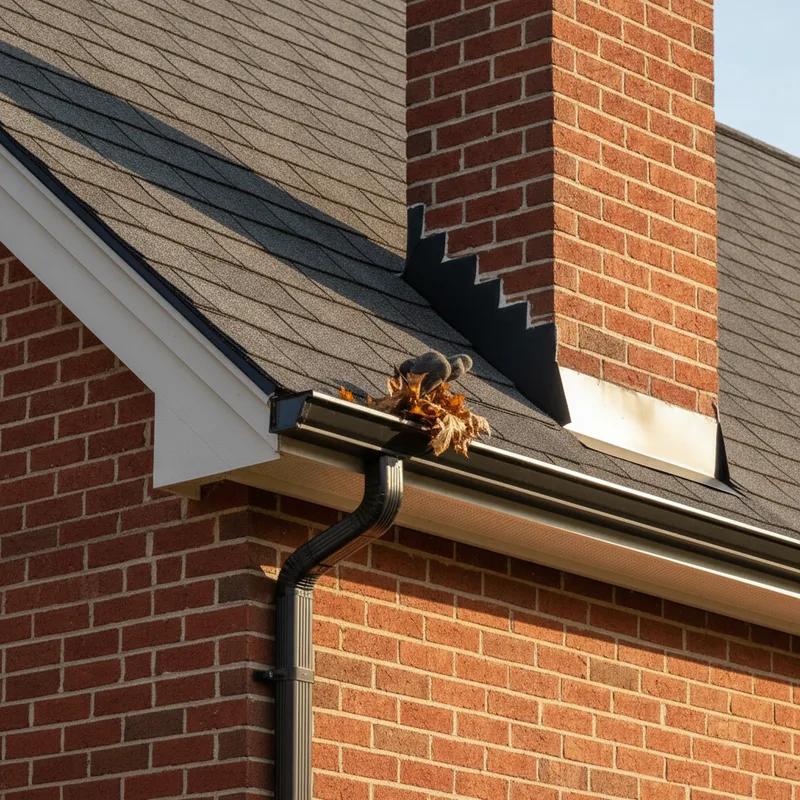
Clean your gutters and downspouts at least twice a year — once in late spring and once in late fall after leaves have dropped. Philadelphia's urban tree canopy is dense in neighborhoods like Mt. Airy, Manayunk, and the Northeast, and clogged gutters are one of the leading causes of water backing up under roofing materials and into fascia boards. Consider installing gutter guards to reduce maintenance frequency.

Schedule a professional roof inspection every one to two years, and always after a major storm event. Philadelphia's severe thunderstorm season — which typically peaks in late spring and summer — can cause hail and wind damage that isn't immediately visible but creates entry points for water. A post-storm inspection is one of the smartest investments a homeowner can make.

For flat roofs, have a contractor apply a fresh roof coating every five to seven years, depending on the membrane type and condition. Products like EPDM, TPO, and modified bitumen are common in Philadelphia and each has specific maintenance requirements. Keeping seams sealed and drains clear is essential to flat roof longevity.

Address small issues immediately. A loose piece of flashing, a single missing shingle, or a small crack in a parapet wall cap might seem minor, but each is an invitation for water to enter. The cost of a minor repair is almost always a fraction of what you'll pay once water damage has set in.

Finally, consider enrolling in Philadelphia's Basic Systems Repair Program or other city-administered home repair assistance programs if you're a qualifying homeowner. These programs can help lower-income residents address structural roofing issues before they become emergencies, keeping more Philadelphia homes safe and sound for the long term.

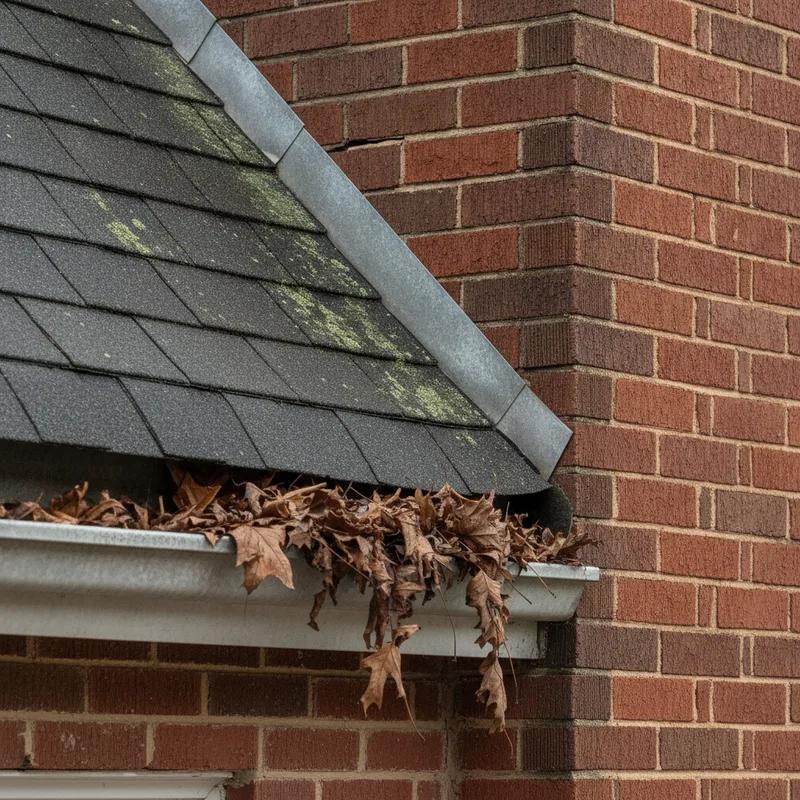
A homeowner on a ladder cleaning leaf debris from gutters on a Philadelphia row home in fall, with colorful street trees visible in the background
Preventing Hidden Leaks: Maintenance Strategies for Philadelphia Homes

Frequently Asked Questions

How do I know if I have a hidden roof leak in my Philadelphia home?

Common signs include musty odors in your attic, discolored or soft wood on roof rafters, paint bubbling on ceilings or walls, and efflorescence (white chalky residue) on interior masonry. Because Philadelphia row homes have complex rooflines and shared walls, leaks can travel far from their source — a professional inspection is the most reliable way to confirm and locate a hidden leak.

How much does it cost to repair a roof leak in Philadelphia?

Minor repairs such as flashing replacement or patching a flat roof membrane typically range from a few hundred to around $1,500, depending on the scope and materials. If a leak has gone undetected and caused structural damage, costs can rise significantly into the thousands. Getting multiple quotes from licensed Philadelphia contractors and acting early is the best way to keep costs manageable.

Do I need a permit to repair a roof leak in Philadelphia?

Philadelphia's Department of Licenses & Inspections (L&I) requires permits for most roofing work beyond minor maintenance. Full roof replacements and significant repairs typically require a permit, and work in historic districts may have additional requirements. Your licensed roofing contractor should handle the permit process — always confirm this before work begins.

Can a roof leak cause mold in my Philadelphia home?

Yes — and it can happen faster than most homeowners expect. Philadelphia's humidity, especially in summer, creates ideal conditions for mold growth once moisture enters wall cavities or insulation. Mold can begin developing within 24 to 48 hours of water intrusion, making early leak detection and prompt repair critical to protecting your family's health and your home's structural integrity.

What should I do if my neighbor's roof is causing a leak into my Philadelphia row home?

Start by documenting the damage thoroughly with photos and dates, then have a direct conversation with your neighbor. If the issue isn't resolved, you may need to consult a licensed roofing contractor who can provide a professional assessment identifying the source. In persistent cases, Philadelphia's L&I office can be contacted to inspect for code violations, and legal options such as mediation or small claims court are available if necessary.

James Callahan
Founder & Editor, Philly Roof Find

James founded Philly Roof Find to give Philadelphia homeowners a transparent, independent resource for evaluating roofing contractors. With a background in building trades and a focus on local construction practices, he writes practical guides grounded in Philadelphia-specific building codes, materials, and contractor standards.