Roof Coating Options for Philadelphia Flat Roofs: Silicone, Acrylic & Elastomeric Compared

Compare silicone, acrylic, and elastomeric roof coatings for Philadelphia flat roofs. Expert advice on costs, performance, and the best choice for Philly weather.

Roof Coating Options for Philadelphia Flat Roofs: Silicone, Acrylic & Elastomeric Compared - Philadelphia roofing guide

Flat roofs are a defining feature of Philadelphia's rowhouses, commercial buildings, and mixed-use properties — but they require the right protective coating to survive the city's punishing weather cycles.

James Callahan
Published March 17, 2026·Updated March 17, 2026
1

Why Flat Roof Coatings Matter in Philadelphia's Climate

Philadelphia's weather is notoriously hard on flat roofs. The city experiences hot, humid summers with temperatures regularly climbing into the 90s°F, cold winters with freeze-thaw cycles that can crack and blister roofing membranes, and intense spring rainstorms that test drainage systems to their limits. For the thousands of rowhouse owners in neighborhoods like Point Breeze, Kensington, and Brewerytown — as well as commercial property owners across Center City and North Philadelphia — a flat roof without proper coating is a flat roof that's aging fast.

Roof coatings act as a protective barrier that sits on top of your existing roofing membrane (whether that's EPDM rubber, modified bitumen, TPO, or built-up roofing). They seal minor cracks and pinholes, reflect UV radiation, improve waterproofing, and can dramatically slow the degradation that Philadelphia's temperature swings accelerate. Rather than replacing an entire flat roof — a project that can cost $8,000 to $20,000 or more depending on square footage — a quality coating application typically runs $1.50 to $4.00 per square foot, making it one of the most cost-effective maintenance investments available.

Beyond cost savings, Philadelphia's growing interest in sustainability and energy efficiency makes roof coatings especially relevant. Light-colored or reflective coatings can reduce rooftop surface temperatures by 50°F or more on summer days, cutting cooling loads and helping property owners comply with the city's increasingly energy-conscious building standards. The Philadelphia Water Department's Green City, Clean Waters initiative has also spotlighted the importance of managing stormwater at the roof level — and coatings that improve membrane integrity play a supporting role in that broader effort.

Before choosing a coating, it's important to have your existing roof inspected by a licensed Philadelphia roofing contractor. Coatings work best on roofs that are structurally sound and relatively dry. If your flat roof has significant ponding water, delamination, or major membrane failure, a coating alone won't solve the underlying problem.
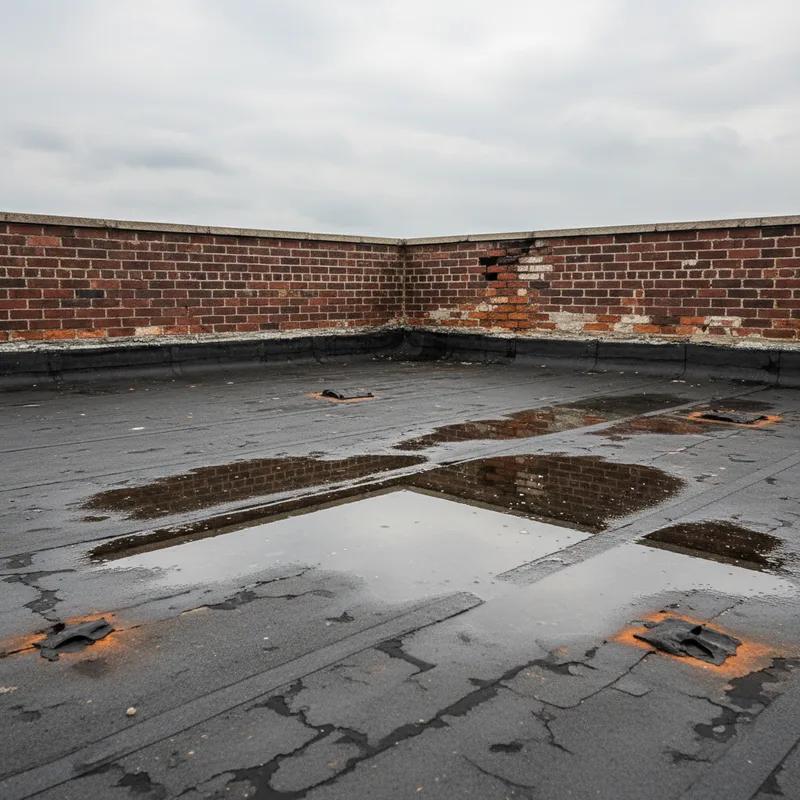
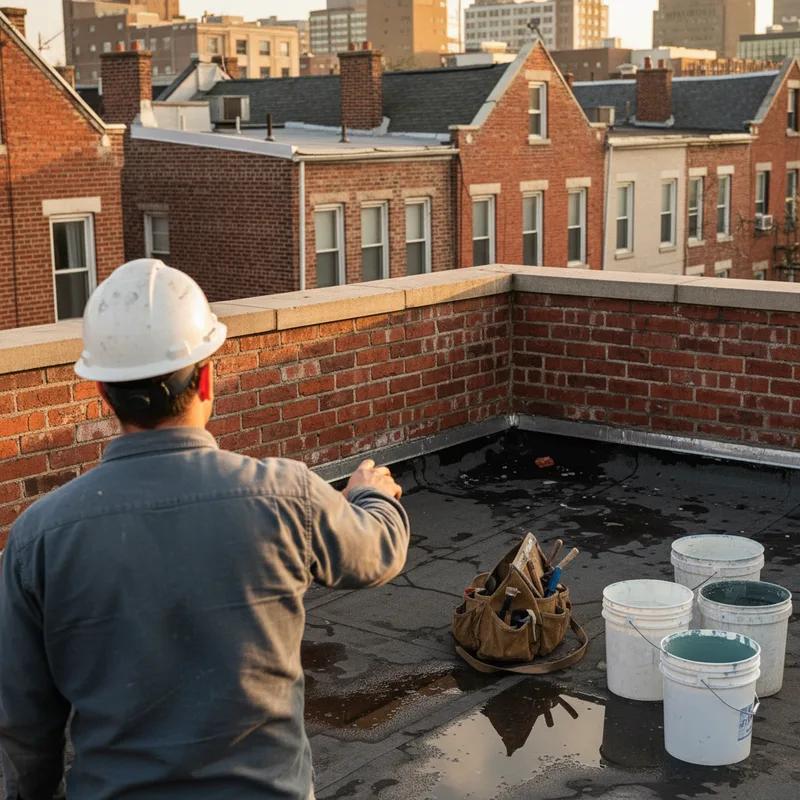
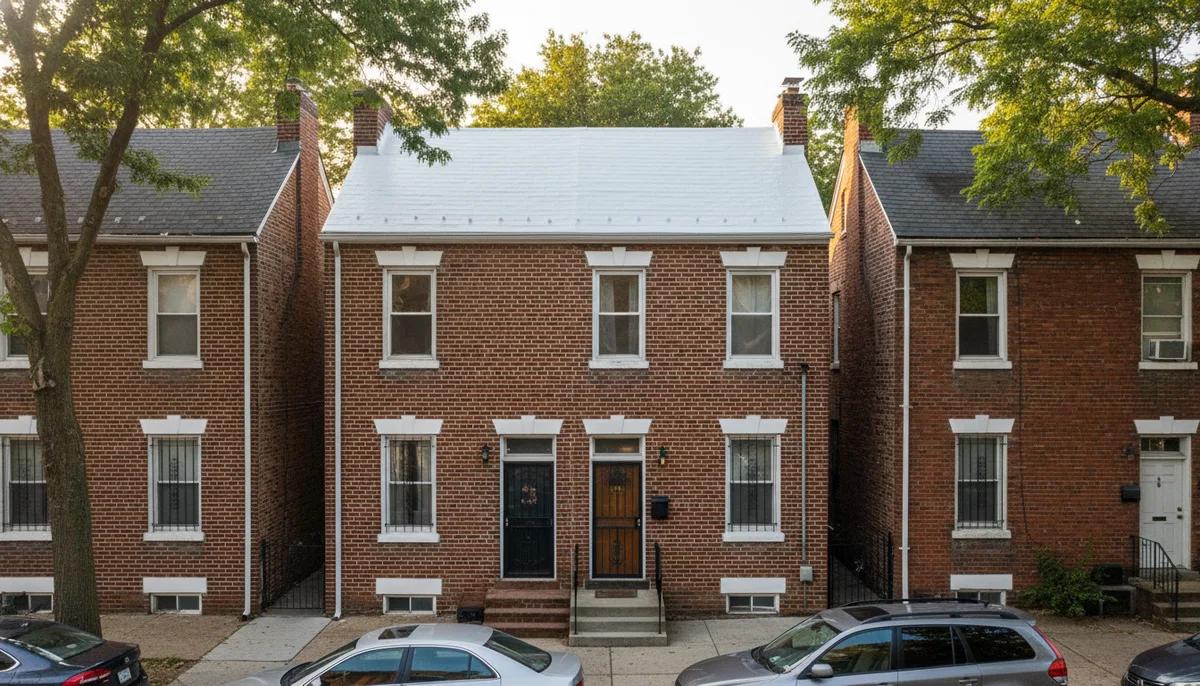
A Philadelphia rowhouse with a flat roof showing visible weathering and cracking on the membrane surface, with the city skyline visible in the background
Why Flat Roof Coatings Matter in Philadelphia's Climate

2

Silicone Roof Coatings: The Best Choice for Ponding Water

Silicone roof coatings have become the go-to option for many Philadelphia flat roof owners, and for good reason. Unlike acrylic coatings, silicone does not absorb water — meaning it holds up exceptionally well in areas where water pools or ponds after heavy rain. If your flat roof has even minor drainage issues (a common problem in older Philadelphia rowhouses and commercial buildings where the roof deck may have settled or shifted over decades), silicone is the most forgiving choice.

Silicone coatings are applied as a liquid and cure into a flexible, rubber-like membrane. They offer excellent UV resistance, which is critical for Philadelphia's sun-exposed flat roofs during summer months, and they maintain their flexibility across a wide temperature range — from below-freezing winters in neighborhoods like Roxborough and Chestnut Hill to scorching summer rooftops in South Philadelphia. Most silicone coatings carry manufacturer warranties ranging from 10 to 20 years when properly applied at the recommended thickness (typically 20–30 mils dry film thickness).

The main drawbacks of silicone are its slipperiness when wet (a safety concern for rooftop HVAC maintenance) and its tendency to attract and hold dirt over time, which can reduce its reflectivity. It also cannot be easily coated over with other materials if you want to switch systems later — silicone must be recoated with silicone.

In terms of cost, silicone coatings generally run $2.00 to $4.50 per square foot installed in the Philadelphia market, placing them at the higher end of the coating spectrum. However, for buildings with flat roofs that experience regular ponding — a widespread issue in Philadelphia's older building stock — the durability advantage often justifies the premium. Ask your contractor about silicone products that meet ENERGY STAR reflectivity standards, as these may qualify for utility rebates through PECO's energy efficiency programs.

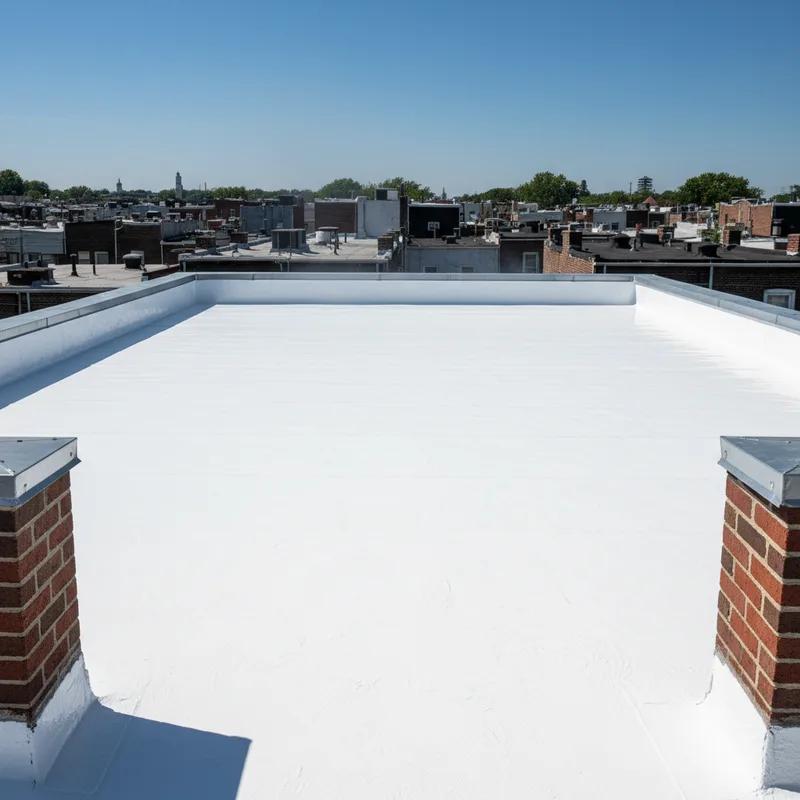
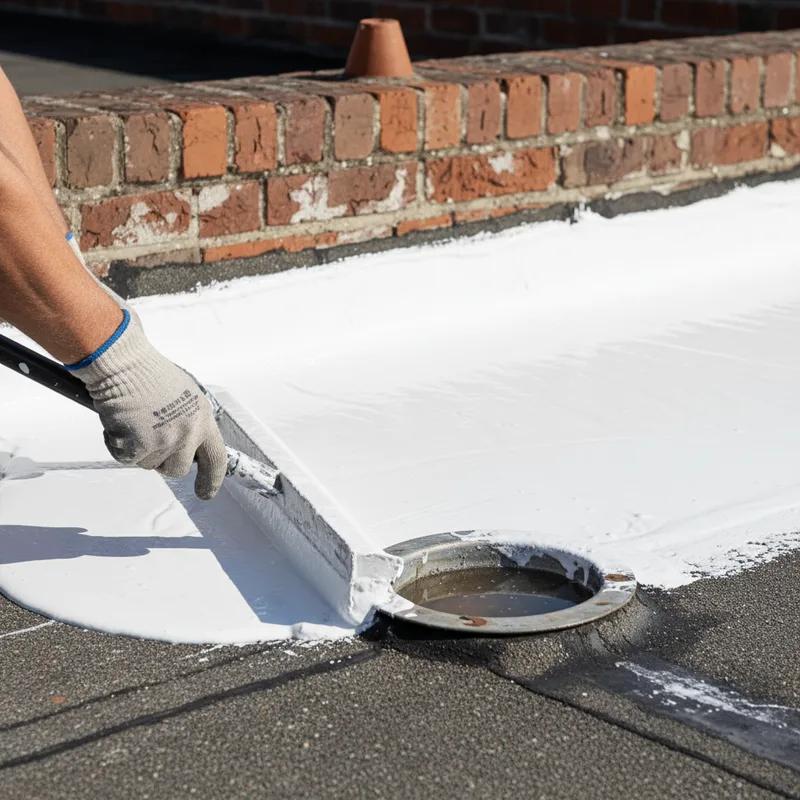
A roofing contractor applying white silicone coating to a flat commercial roof in Philadelphia using a squeegee roller, with row homes visible in the surrounding neighborhood
Silicone Roof Coatings: The Best Choice for Ponding Water

3

Acrylic Roof Coatings: Affordable and Reflective for Philly Summers

Acrylic roof coatings are water-based, environmentally friendly, and among the most affordable coating options available — making them a popular choice for Philadelphia homeowners and small landlords looking to extend the life of their flat roofs without a major financial outlay. They apply easily with a brush, roller, or spray equipment, and they dry to a bright white or light-colored finish that reflects significant solar heat.

For Philadelphia properties where energy efficiency is a priority, acrylic coatings deliver strong reflectivity performance right out of the gate. A freshly applied white acrylic coating can achieve solar reflectance values above 0.80, meaning it reflects more than 80% of incoming sunlight — a meaningful advantage during Philadelphia's hot summers when rooftop temperatures can exceed 150°F on uncoated dark surfaces. This can translate into measurable reductions in air conditioning costs for rowhouse owners and building managers across neighborhoods like West Philly, Germantown, and Logan.

However, acrylic coatings have a notable limitation in Philadelphia's climate: they are not recommended for areas with consistent ponding water. Acrylic is water-based and will re-emulsify and degrade if water sits on the surface for extended periods (typically more than 48 hours). Given Philadelphia's heavy spring and summer rainstorms and the prevalence of flat roofs with marginal drainage, this is a real-world concern that should factor into your decision.

Acrylic coatings also tend to become brittle in very cold temperatures, which can lead to cracking during Philadelphia's freeze-thaw cycles in January and February. They work best in climates with mild winters — making them a better seasonal maintenance coat than a standalone long-term solution for many Philly properties.

Installed costs for acrylic coatings in Philadelphia typically range from $1.50 to $3.00 per square foot, making them the most budget-friendly option. They're an excellent choice for roofs in good condition with proper drainage that need a reflective refresh rather than a full restoration.

A homeowner in a Philadelphia rowhouse neighborhood watching a contractor apply bright white acrylic coating to a flat roof on a sunny day, with similar rowhouses visible on the street
Acrylic Roof Coatings: Affordable and Reflective for Philly Summers

4

Elastomeric Roof Coatings: Flexible Protection for Philadelphia's Temperature Swings

Elastomeric roof coatings are defined by their exceptional flexibility and elongation properties — they can stretch and recover without cracking, making them particularly well-suited to Philadelphia's dramatic seasonal temperature swings. The term "elastomeric" refers to a category of coatings rather than a single chemistry; elastomeric products can be acrylic-based, polyurethane-based, or rubber-based, but they all share the characteristic of high elasticity.

For Philadelphia property owners, the key advantage of elastomeric coatings is their ability to bridge small cracks and movement joints in aging roofing membranes. Philadelphia's older building stock — including the thousands of rowhouses built in the early to mid-20th century across neighborhoods like Fishtown, Fairmount, and Gray's Ferry — often features roofing substrates that have experienced significant thermal movement and minor structural settling over the decades. Elastomeric coatings can accommodate this movement without failing, providing a durable, seamless waterproof layer that rigid coatings cannot match.

Polyurethane-based elastomeric coatings offer particularly strong abrasion resistance, making them a smart choice for rooftops that see foot traffic — think rooftop decks in Northern Liberties condos or commercial buildings where HVAC technicians need regular access. They also perform well in cold temperatures, maintaining flexibility even during Philadelphia's harshest winter months.

The trade-off is cost and application complexity. Elastomeric coatings, particularly polyurethane systems, typically run $2.50 to $5.00 per square foot installed and require careful surface preparation and precise application conditions. Most manufacturers specify minimum application temperatures (usually above 50°F) and low humidity — conditions that can limit the installation window in Philadelphia to spring and fall months.

When evaluating elastomeric options, ask your contractor for products with documented elongation ratings of at least 300% and tensile strength data appropriate for your roof type. Philadelphia's L&I (Department of Licenses and Inspections) requires that all roofing work — including coating applications — be performed by licensed contractors, so verify credentials before signing any contract.

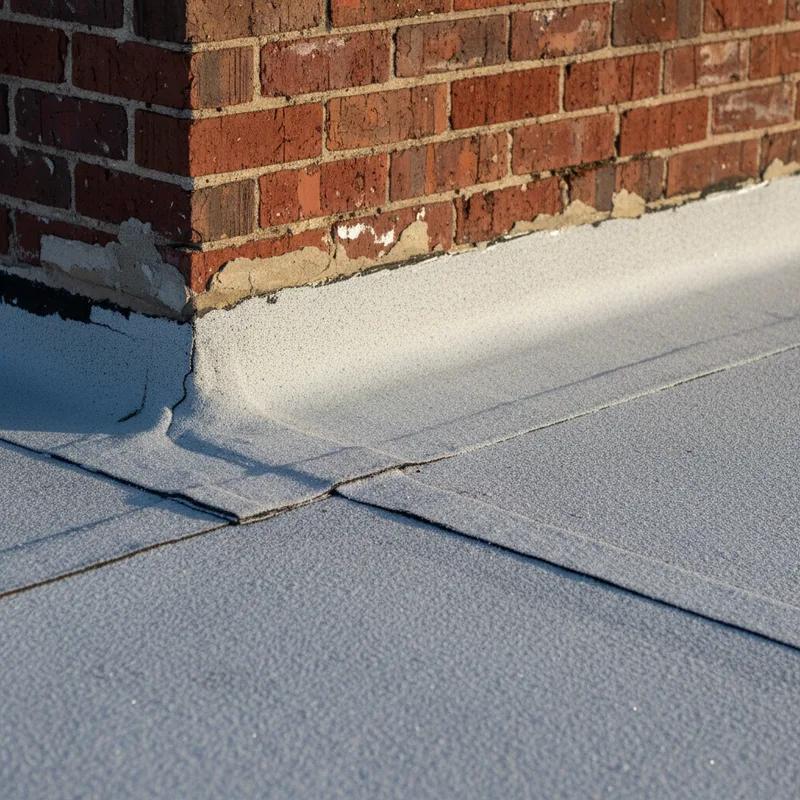
A roofing technician in safety gear applying gray elastomeric coating to a flat roof on a Philadelphia commercial building, with a temperature gauge visible showing cool fall weather conditions
Elastomeric Roof Coatings: Flexible Protection for Philadelphia's Temperature Swings

5

Comparing Costs, Longevity, and Philly Building Code Considerations

Choosing the right roof coating isn't just about chemistry — it's about matching the product to your building's specific conditions, your budget, and Philadelphia's regulatory requirements. Here's a practical side-by-side look at how the three main coating types stack up for Philadelphia property owners.

Cost Comparison (installed, per square foot):

  • Acrylic: $1.50 – $3.00
  • Silicone: $2.00 – $4.50
  • Elastomeric (polyurethane): $2.50 – $5.00

Expected Lifespan with Proper Maintenance:

  • Acrylic: 5–10 years (less in ponding-prone areas)
  • Silicone: 10–20 years
  • Elastomeric: 10–15 years

Best Suited For:

  • Acrylic: Well-drained roofs, energy efficiency focus, tight budgets
  • Silicone: Ponding water issues, UV-heavy exposure, long-term durability
  • Elastomeric: High-movement roofs, foot traffic areas, cold-weather flexibility

From a Philadelphia building code standpoint, the Department of Licenses and Inspections (L&I) generally requires a permit for roof replacement but may not require one for a coating application over an existing membrane — however, this depends on the scope of work and the building type. Always confirm with L&I before starting work, especially on commercial properties or buildings in historic districts like Society Hill or Rittenhouse Square, where the Philadelphia Historical Commission may have additional requirements.

For properties participating in Philadelphia's various energy efficiency or weatherization programs, reflective roof coatings that meet ENERGY STAR criteria may be eligible for incentives. Check with the Philadelphia Energy Authority and your utility provider for current rebate availability.

Finally, don't overlook the importance of surface preparation. No coating — regardless of price or quality — will perform well on a dirty, wet, or structurally compromised substrate. A thorough cleaning, crack repair, and primer application (where required) are non-negotiable steps that reputable Philadelphia roofing contractors will always include in their scope of work.

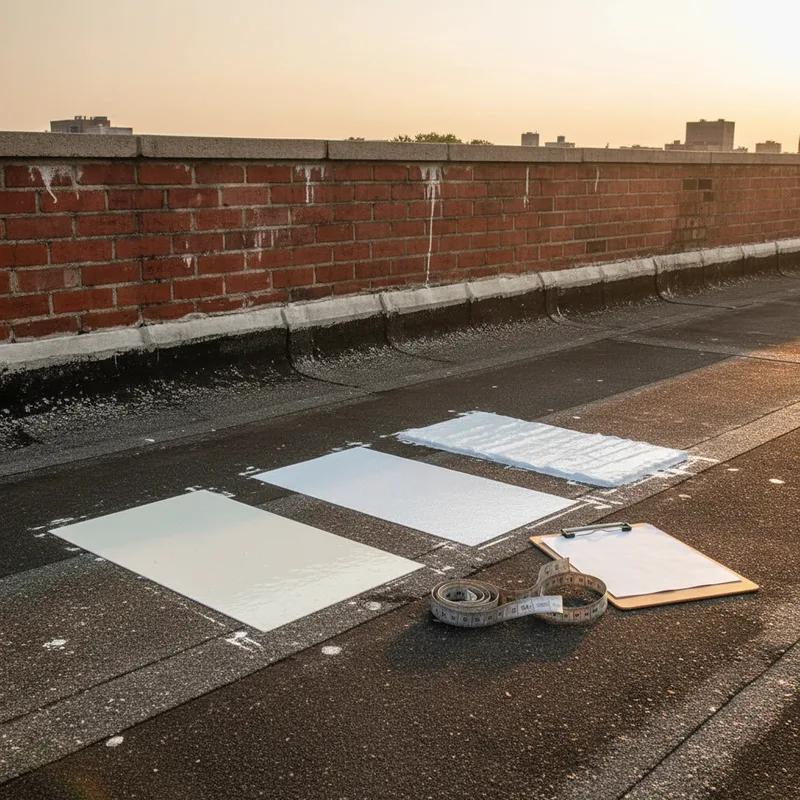
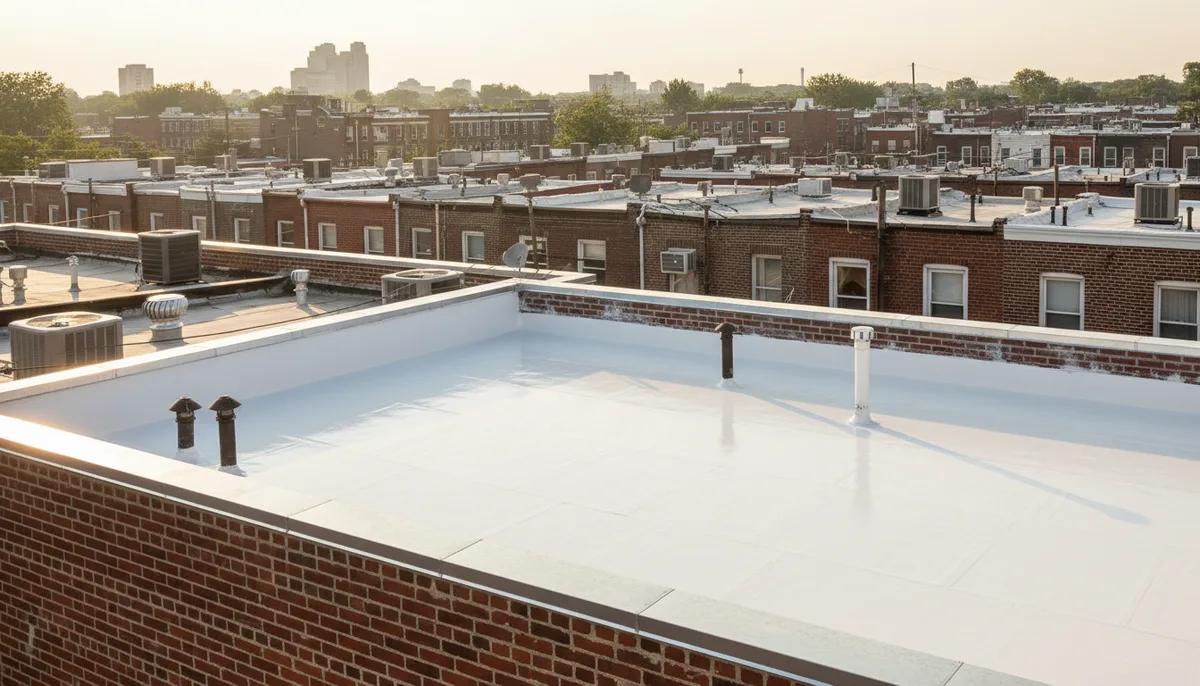
A side-by-side comparison photo showing three sections of flat roofing with different coating finishes — white acrylic, white silicone, and gray elastomeric — on adjacent Philadelphia rowhouse rooftops
Comparing Costs, Longevity, and Philly Building Code Considerations

6

How to Choose a Roof Coating Contractor in Philadelphia

Even the best roof coating product will fail prematurely if it's improperly applied — which makes contractor selection as important as product selection. Philadelphia has a large and varied roofing contractor market, and knowing what to look for will protect your investment.

First and foremost, verify that any contractor you consider holds a valid Home Improvement Contractor (HIC) license through the Pennsylvania Attorney General's Office, as required by the Pennsylvania Home Improvement Consumer Protection Act. You can verify licensing status through the PA Attorney General's online contractor search tool. Additionally, confirm that the contractor carries general liability insurance and workers' compensation coverage — a critical protection given that flat roof work involves working at height.

Look for contractors who are certified applicators for the specific coating product they're recommending. Major manufacturers like Tremco, GacoFlex, Henry, and Karnak offer contractor certification programs, and using a certified applicator is often required to activate the manufacturer's warranty. A 10- or 15-year material warranty is only as good as the installation quality behind it.

Get at least three written estimates and make sure each one specifies the coating product (including manufacturer and product name), application thickness in mils, surface preparation method, number of coats, and warranty terms. Be cautious of any contractor who provides a vague estimate or pressures you to sign immediately — these are common red flags in the Philadelphia roofing market.

Ask for references from similar Philadelphia projects — ideally rowhouses or commercial buildings in your neighborhood — and follow up by calling those references. Local experience matters: a contractor familiar with the specific drainage challenges of South Philly rowhouses or the historic masonry parapet walls in Germantown will deliver better results than one without local context.

Finally, use resources like Philly Roof Find to identify vetted, reviewed roofing contractors in your area. Reading verified reviews from Philadelphia homeowners who have had coating work done can give you confidence that the contractor you choose has a proven track record in your city.

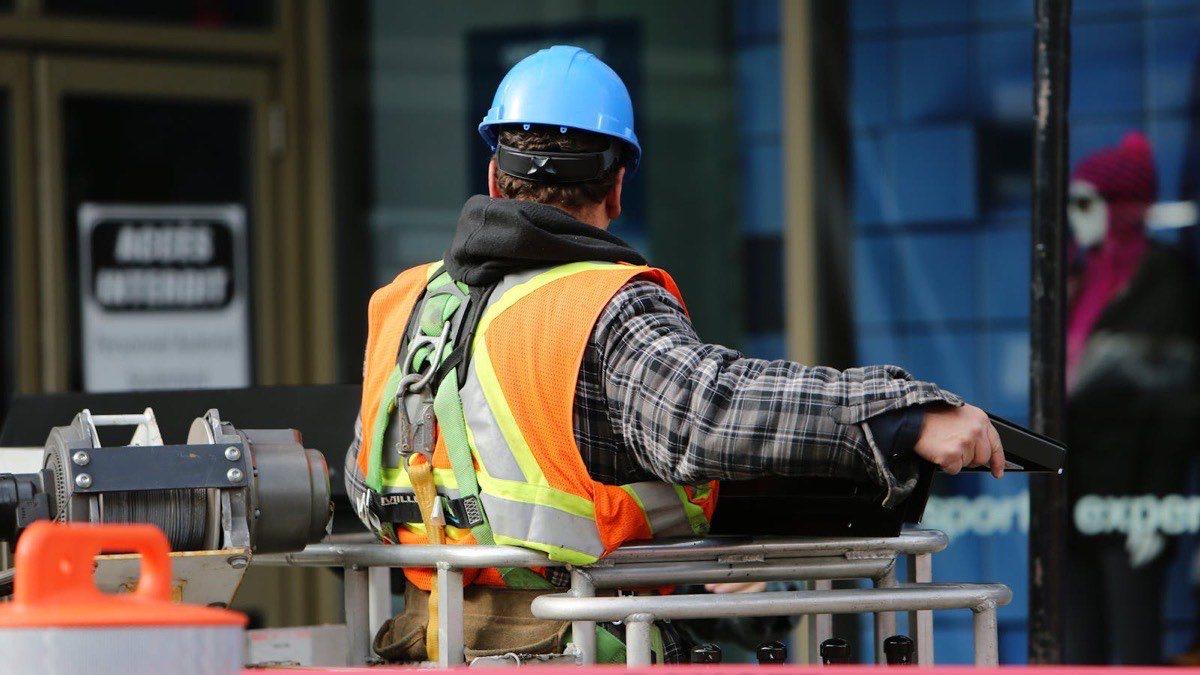
A Philadelphia homeowner reviewing a written roofing estimate with a licensed roofing contractor on the rooftop of a rowhouse, with a flat roof membrane and parapet wall visible behind them
How to Choose a Roof Coating Contractor in Philadelphia

Frequently Asked Questions

What is the best roof coating for a Philadelphia flat roof?

Silicone coatings are generally the best all-around choice for Philadelphia flat roofs because they resist ponding water, maintain flexibility through freeze-thaw cycles, and offer long-lasting UV protection. However, if your roof drains well and you're primarily focused on energy efficiency, a high-quality acrylic coating can be an effective and more affordable option.

How long does a roof coating last on a Philadelphia flat roof?

Lifespan varies by coating type and application quality. Acrylic coatings typically last 5–10 years, silicone coatings 10–20 years, and elastomeric coatings 10–15 years under Philadelphia conditions. Regular inspections and recoating when the film thins out will maximize the protective life of any coating system.

Do I need a permit to coat my flat roof in Philadelphia?

A coating application over an existing membrane typically does not require a permit in Philadelphia, but this depends on the scope of work and your building type. Always check with the Philadelphia Department of Licenses and Inspections (L&I) before starting work, especially for commercial properties or buildings in historic districts.

Can roof coatings fix a leaking flat roof in Philadelphia?

Roof coatings can seal minor cracks, pinholes, and surface-level vulnerabilities that cause leaks, but they are not a substitute for repairing major membrane failures, structural damage, or significant ponding water problems. A professional inspection is essential before coating to identify issues that need repair first.

Are roof coatings worth it for Philadelphia rowhouses?

Yes — for rowhouses with flat roofs in good to fair condition, a quality coating is one of the most cost-effective maintenance investments available. It can extend roof life by a decade or more, reduce summer cooling costs through solar reflectance, and delay the need for a full roof replacement that could cost $10,000 or more.

James Callahan
Founder & Editor, Philly Roof Find

James founded Philly Roof Find to give Philadelphia homeowners a transparent, independent resource for evaluating roofing contractors. With a background in building trades and a focus on local construction practices, he writes practical guides grounded in Philadelphia-specific building codes, materials, and contractor standards.