How Summer Heat Affects Your Roof in Philadelphia

Discover how Philadelphia's hot, humid summers damage roofing materials, speed up aging, and what homeowners can do to protect their roof this season.

How Summer Heat Affects Your Roof in Philadelphia - Philadelphia roofing guide

Philadelphia summers bring intense heat, high humidity, and sudden thunderstorms that can silently wreak havoc on your roof.

James Callahan
Published June 2, 2026·Updated June 2, 2026
1

Philadelphia's Summer Climate and What It Means for Your Roof

Philadelphia summers are no joke. The city routinely experiences heat index values well above 100°F during peak summer months, with average July temperatures hovering in the low-to-mid 90s. Add in the dense urban heat island effect — especially pronounced in neighborhoods like Kensington, Point Breeze, and North Philly — and rooftop surface temperatures can soar to 150°F or higher on a clear afternoon.

What makes Philadelphia's summer climate particularly punishing for roofs isn't just the heat itself — it's the combination of intense sun, high relative humidity, and frequent afternoon thunderstorms. This cycle of thermal expansion and contraction, followed by sudden moisture exposure, stresses every component of your roofing system simultaneously.

According to NOAA climate data, Philadelphia has seen a measurable increase in the number of days exceeding 90°F over the past two decades, a trend that shows no signs of reversing. For homeowners, this means roofing materials that were once rated to last 20–30 years may be aging significantly faster under current conditions.

The city's older housing stock compounds the problem. Many Philadelphia homes — particularly the iconic row homes that define neighborhoods from South Philly to Germantown — were built with roofing systems never designed to withstand today's heat extremes. Whether you have a sloped asphalt shingle roof, a flat rubber membrane, or a historic slate installation, understanding how summer heat interacts with your specific roof type is the first step toward protecting your investment.

The good news is that awareness and proactive maintenance go a long way. Knowing what to look for, when to call a professional, and which upgrades offer the best protection can save Philadelphia homeowners thousands of dollars in avoidable repairs.
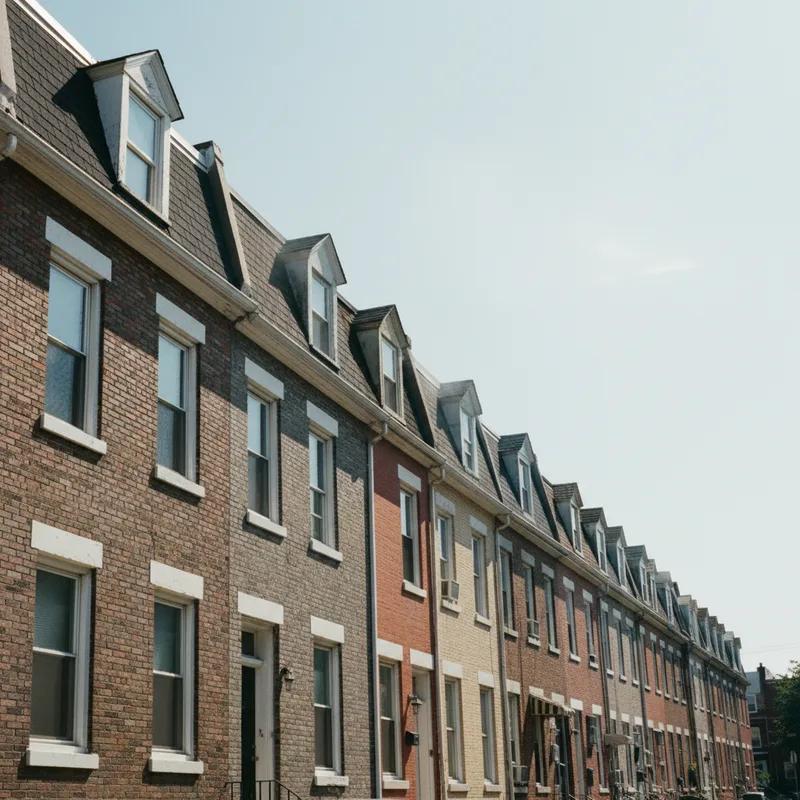
Aerial view of a dense Philadelphia residential neighborhood on a sunny summer day, showing rooftops shimmering in the heat with a clear blue sky overhead
Philadelphia's Summer Climate and What It Means for Your Roof

2

How Extreme Heat Damages Asphalt Shingles and Flat Roofing Materials

Asphalt shingles are by far the most common roofing material on Philadelphia's sloped roofs, and they are particularly vulnerable to summer heat. When surface temperatures consistently exceed 140°F, the asphalt binder in the shingles begins to soften. This causes the granules embedded in the shingle surface — which protect the underlying asphalt from UV radiation — to loosen and wash away. You may notice these granules accumulating in your gutters or at the base of your downspouts. Once granule loss accelerates, UV degradation speeds up dramatically, and the shingles become brittle, crack, and curl at the edges.

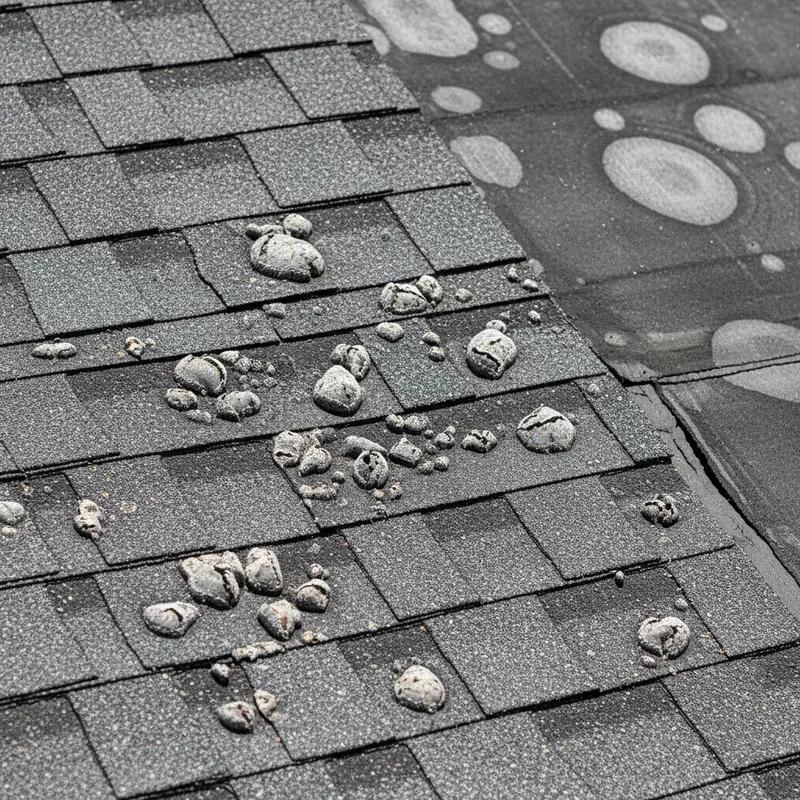
Blistering is another common heat-related shingle problem. When volatile compounds trapped within the shingle material vaporize due to extreme heat, they create small bubbles or blisters on the surface. These blisters weaken the shingle's structural integrity and create entry points for water during the heavy rain events that typically follow Philadelphia's summer heat waves.

For the many Philadelphia homeowners with flat roofs — a defining feature of row homes throughout neighborhoods like Fishtown, Passyunk Square, and West Philly — the heat challenges are different but equally serious. EPDM rubber membranes can become tacky and deform under prolonged high heat. TPO and modified bitumen membranes are susceptible to seam separation as materials repeatedly expand and contract. Standing water left after summer storms accelerates UV degradation in areas where the membrane has already been weakened by heat stress.

Aluminum and metal flashing around chimneys, skylights, and roof penetrations also expands significantly in summer heat. Over time, this repeated expansion and contraction loosens the seals and fasteners that hold flashing in place, creating leak pathways that may not become apparent until the fall rains arrive.

Recognizing these damage patterns early — ideally through a professional inspection in late spring — is the most cost-effective way to stay ahead of heat-related roofing problems.

Close-up of curling and blistered asphalt shingles on a Philadelphia row home roof showing heat damage, with granule loss visible on the shingle surface
How Extreme Heat Damages Asphalt Shingles and Flat Roofing Materials

3

The Hidden Danger: How Poor Roof Ventilation Supercharges Heat Damage

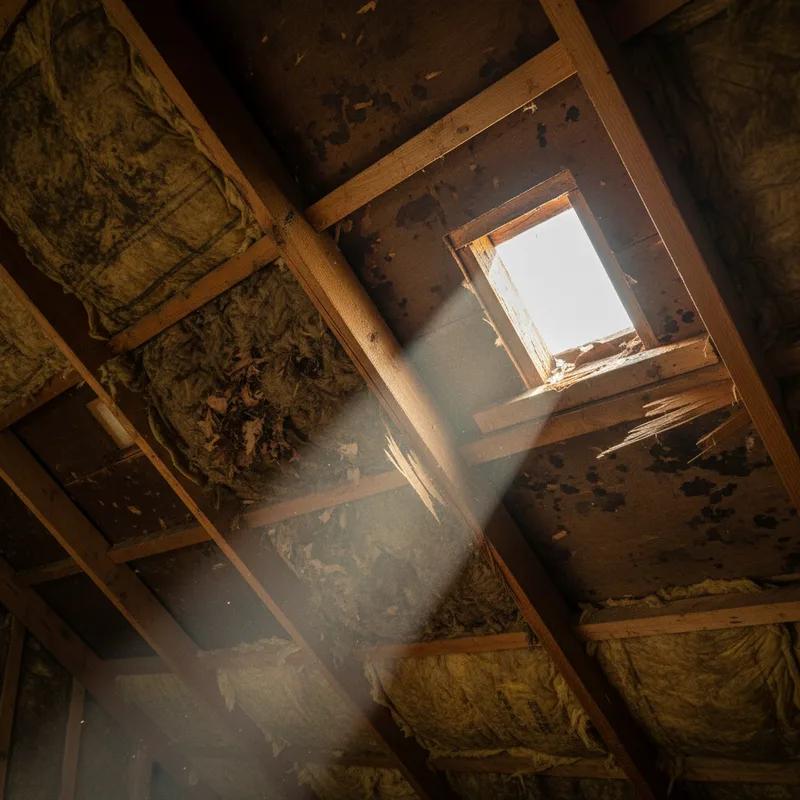
One of the most underappreciated contributors to summer roof damage in Philadelphia is inadequate attic ventilation. When a roof lacks sufficient intake and exhaust ventilation, heat builds up in the attic space and essentially cooks the roof from the inside out. Attic temperatures in poorly ventilated Philadelphia homes can reach 160°F or more on a hot summer day — well above the threshold that accelerates shingle degradation and compromises roof deck integrity.

This is a particularly widespread problem in Philadelphia's row home stock. Many of these attached homes were built with minimal attic space and ventilation systems that were undersized to begin with, and decades of renovations have sometimes made things worse by blocking existing vents or adding insulation without compensating with additional airflow.

The Philadelphia Building Code, enforced by the Department of Licenses and Inspections (L&I), requires a minimum ventilation ratio of 1:150 for attic spaces (or 1:300 when a vapor barrier is present and ventilation is balanced between high and low points). However, many older homes fall well short of this standard, and homeowners often don't discover the problem until they're facing premature roof failure or sky-high summer cooling bills.

Proper ventilation works by allowing cooler outside air to enter through soffit vents at the eaves and hot air to escape through ridge vents or gable vents at the roof's peak. This continuous airflow keeps attic temperatures closer to ambient outdoor temperatures, dramatically reducing the thermal stress on roofing materials.

Beyond protecting your roof, good ventilation has a meaningful impact on energy efficiency. A well-ventilated attic reduces the load on your air conditioning system, which can translate to noticeable savings on summer utility bills — a welcome benefit for homeowners in energy-intensive neighborhoods like Center City or University City where row home cooling costs can be substantial.

If you haven't had your attic ventilation assessed recently, a summer roof inspection is the ideal time to add it to the checklist.

A roofing contractor inspecting attic ventilation in a Philadelphia row home, with a ridge vent and soffit vent visible and a thermometer showing high attic temperature
The Hidden Danger: How Poor Roof Ventilation Supercharges Heat Damage

4

Row Homes, Shared Walls, and Summer Roofing Challenges Unique to Philadelphia

Philadelphia's iconic row homes present a set of roofing challenges that are genuinely unique to this city's housing stock. Because row homes share party walls, heat transfer between adjacent units is constant — and in summer, this means the thermal load on your roof is influenced not just by the sun above but by the heat radiating from neighboring structures on either side.

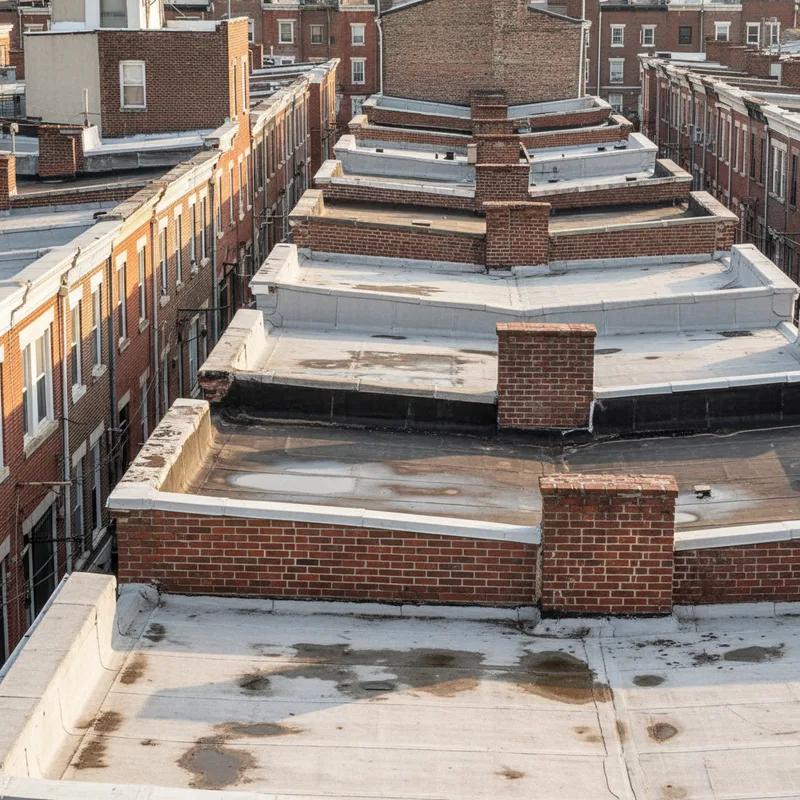
Flat and low-slope roofs are the norm on Philadelphia row homes, and these designs absorb significantly more solar radiation than pitched roofs. A dark-colored modified bitumen or built-up roof on a South Philly row home can reach surface temperatures that are 50–70°F hotter than the ambient air temperature on a clear summer day. This isn't just a comfort issue — it's a material degradation accelerator.

Party wall flashing is another area of particular concern. The flashing that seals the junction between your roof and the shared wall with your neighbor is subjected to intense heat cycling throughout the summer. As materials expand and contract, these seals can fail gradually, allowing water to infiltrate in ways that are notoriously difficult to diagnose. Homeowners in neighborhoods like Brewerytown, Strawberry Mansion, and Olney frequently report mysterious interior water stains that turn out to trace back to failed party wall flashing rather than obvious roof penetrations.

Philadelphia's L&I also has specific requirements around roof alterations on attached homes, including party wall height and fire-stopping provisions that must be maintained during any roofing work. Hiring a contractor who understands these code requirements isn't optional — it's essential to ensuring your repair or replacement is both effective and legally compliant.

For row home owners considering a roof replacement, this is also the time to evaluate whether upgrading to a reflective or cool roof coating makes sense. Given the density of attached housing in Philadelphia, even modest reductions in rooftop heat absorption can have a meaningful neighborhood-wide cooling effect.

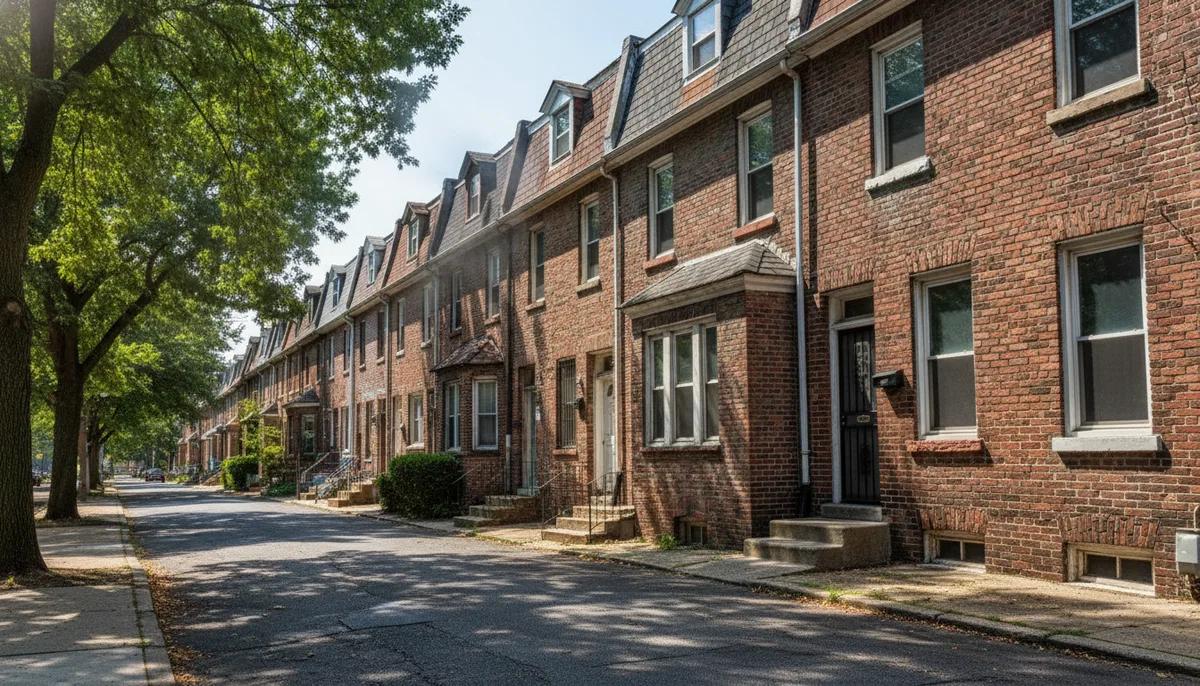
A row of classic Philadelphia brick row homes in summer, showing flat rooftops with visible flashing along party walls and a contractor inspecting the roof surface
Row Homes, Shared Walls, and Summer Roofing Challenges Unique to Philadelphia

5

Cool Roofs, Reflective Coatings, and Heat-Resistant Upgrades Worth Considering

If Philadelphia's summer heat is accelerating wear on your roof, one of the most effective long-term solutions is upgrading to materials or coatings designed to reflect solar energy rather than absorb it. Cool roofing technology has advanced considerably, and there are now practical options for virtually every roof type common in Philadelphia.

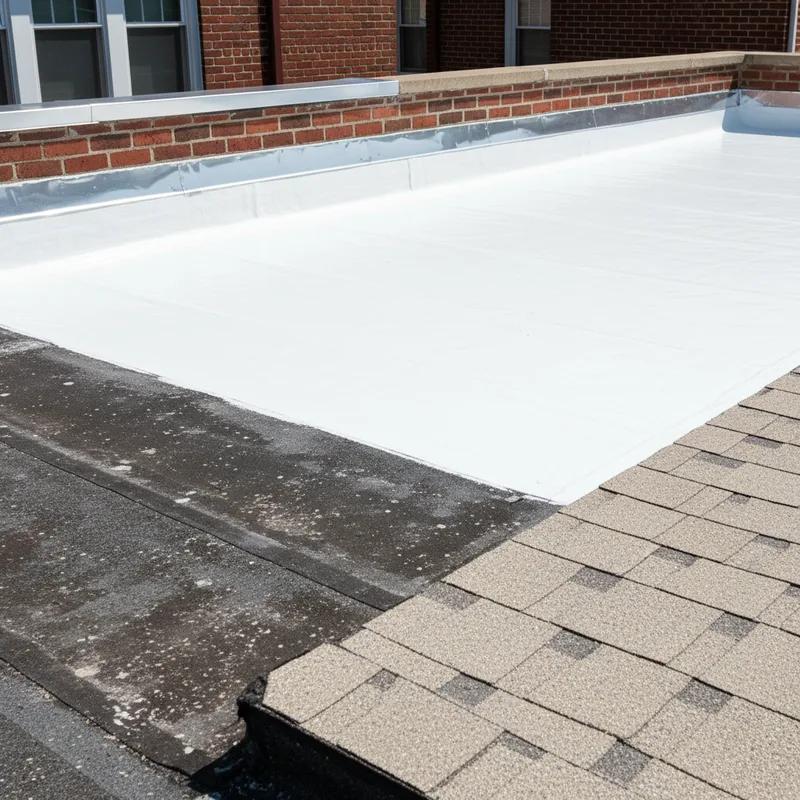
For flat and low-slope roofs — the majority of Philadelphia row homes — white or light-gray TPO membranes and elastomeric roof coatings are among the most cost-effective cool roof solutions. These products can reflect 70–85% of incoming solar radiation compared to the 5–15% reflected by a standard dark modified bitumen surface. The result is dramatically lower rooftop temperatures, reduced thermal stress on the membrane, and meaningful energy savings.

Philadelphia's Office of Sustainability has historically supported cool roof adoption as part of the city's broader urban heat island mitigation strategy, and homeowners should check current city programs for any available incentives or rebates that may apply to cool roof upgrades. The Philadelphia Energy Authority is another resource worth contacting for information on energy efficiency financing that can be applied to qualifying roofing improvements.

For sloped asphalt shingle roofs, manufacturers now offer shingles with specially designed granules that reflect more solar energy than standard products. These "cool shingles" carry ENERGY STAR certification and can meaningfully reduce attic heat gain without requiring a change in roof color — an important consideration for homeowners in Philadelphia's historic districts, where the Philadelphia Historical Commission may have design review authority over exterior changes.

Beyond the roofing material itself, adding or upgrading attic insulation in conjunction with ventilation improvements creates a comprehensive thermal barrier that protects your roof, improves indoor comfort, and reduces energy consumption year-round. Many Philadelphia contractors now offer bundled assessments that evaluate ventilation, insulation, and roofing material condition together, giving homeowners a complete picture of their roof system's summer performance.

A roofing contractor applying white reflective elastomeric coating to a flat roof on a Philadelphia row home on a sunny summer day, with the city skyline visible in the background
Cool Roofs, Reflective Coatings, and Heat-Resistant Upgrades Worth Considering

6

Practical Summer Roof Maintenance Tips for Philadelphia Homeowners

Protecting your roof through a Philadelphia summer doesn't require a major renovation. A consistent, proactive maintenance routine can dramatically extend the life of your roofing system and catch small problems before they escalate into expensive emergencies.

Start with a visual inspection from the ground or, if safe, from a ladder at the roofline. Look for missing, curling, or discolored shingles on sloped roofs. On flat roofs, look for bubbling, cracking, or areas where the membrane appears to be pulling away from edges or penetrations. Check your gutters for excessive granule accumulation — a telltale sign of accelerated shingle wear. After any major summer storm, do a quick scan for obvious damage and check your attic for signs of water intrusion.

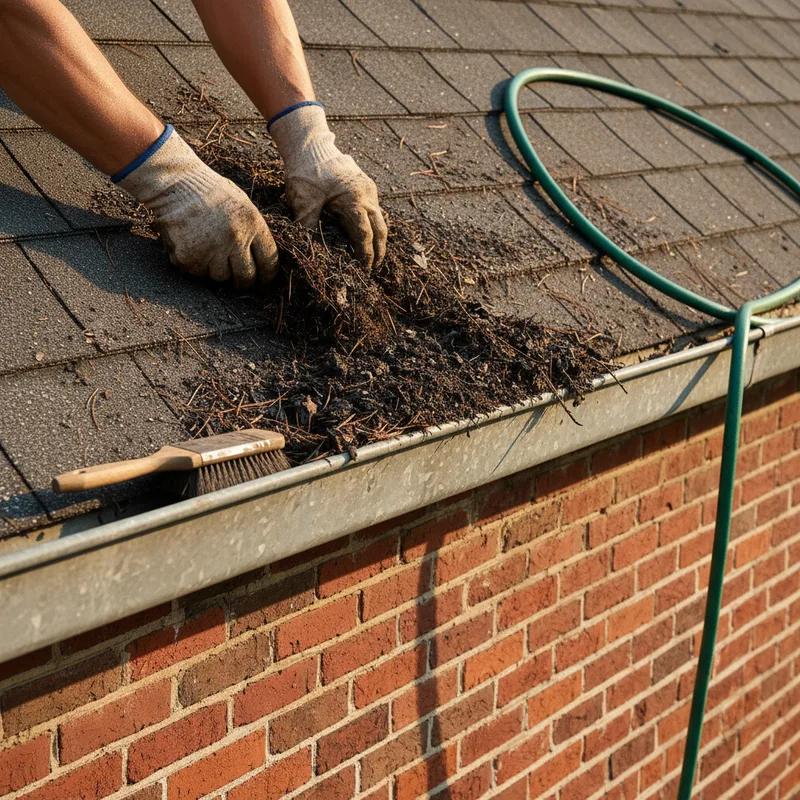
Clean your gutters and downspouts before the peak of summer. Clogged gutters cause water to back up under roofing materials, and in summer heat, standing water accelerates membrane degradation on flat roofs. Philadelphia's summer thunderstorms can dump significant rainfall in a very short period — a clogged gutter system can turn a minor rain event into a water infiltration problem.

Schedule a professional roof inspection if you haven't had one in the past year. A qualified Philadelphia roofing contractor can identify heat-related damage, ventilation deficiencies, and flashing issues that aren't visible from the ground. When hiring a contractor, verify they hold a valid Home Improvement Contractor (HIC) registration with the Pennsylvania Attorney General's Office and are familiar with Philadelphia L&I permit requirements for any repair or replacement work.

If your roof is more than 15 years old, consider requesting a detailed condition assessment rather than a standard inspection. Older roofs are significantly more vulnerable to accelerated summer degradation, and understanding the remaining service life of your system helps you plan financially for replacement before an emergency forces your hand.

Finally, trim any overhanging tree branches before summer storms arrive. Falling limbs are a leading cause of sudden roof damage in Philadelphia's tree-lined neighborhoods, from Chestnut Hill to West Mount Airy.

A Philadelphia homeowner on a ladder inspecting the edge of their row home's flat roof in summer, checking gutters for granule buildup while wearing safety equipment
Practical Summer Roof Maintenance Tips for Philadelphia Homeowners

Frequently Asked Questions

How hot does a roof surface get in Philadelphia during summer?

On a clear summer day in Philadelphia, dark-colored rooftop surfaces can reach 150–170°F — 50 to 70 degrees hotter than the ambient air temperature. Flat roofs with dark membranes tend to absorb the most heat, while reflective or cool roof surfaces can stay 50–60°F cooler under the same conditions.

How can I tell if my Philadelphia roof has heat damage?

Common signs of heat damage include curling, cracking, or blistering shingles, excessive granule loss in your gutters, bubbling or seam separation on flat roof membranes, and water stains inside your attic or on upper-floor ceilings. A professional roof inspection is the most reliable way to assess the full extent of heat-related wear.

Does Philadelphia require a permit for roof repairs or replacement?

Yes. The Philadelphia Department of Licenses and Inspections (L&I) requires permits for most roofing work, including full replacements and significant repairs. Your contractor should pull the necessary permits before work begins — if they suggest skipping this step, treat it as a serious red flag.

Are cool roofs worth the investment for Philadelphia row homes?

For most Philadelphia flat-roof row homes, cool roof coatings or reflective membranes offer a strong return on investment. They reduce rooftop temperatures by up to 60°F, extend membrane lifespan, and can lower summer cooling costs meaningfully. The upfront cost of a reflective coating is typically modest compared to the savings in energy and deferred replacement costs.

How often should I have my roof inspected in Philadelphia?

Most roofing professionals recommend at least one inspection per year, ideally in spring before summer heat arrives or in fall before winter weather sets in. If your roof is over 15 years old, or if you've experienced a severe storm, an additional inspection is warranted. Philadelphia's climate extremes — hot summers, cold winters, and frequent storms — make regular inspections especially important.

James Callahan
Founder & Editor, Philly Roof Find

James founded Philly Roof Find to give Philadelphia homeowners a transparent, independent resource for evaluating roofing contractors. With a background in building trades and a focus on local construction practices, he writes practical guides grounded in Philadelphia-specific building codes, materials, and contractor standards.